
Why Wooden Bowls Work So Well for Salads and Fresh Fruit
This article explains why wooden bowls work so well for serving salads and fresh fruit, from resisting odor absorption to helping maintain airflow around fruit, along with simple care tips.
Wooden bowls are often seen as just a decorative piece in the kitchen, but their function goes well beyond that, especially when used to serve salads or fresh fruit. Their warm, natural texture makes food look more appealing than it would in a plain plastic or glass container.
One reason wooden bowls suit salads so well is that they don't easily absorb odors or flavors from previous ingredients, especially when made from good quality dense wood like teak or acacia. Unlike plastic, which sometimes holds onto the smell of dressing or onion even after washing, properly cared for wood tends to stay neutral once cleaned.
For fresh fruit, wooden bowls also have a practical edge. Their slightly porous surface helps maintain airflow around the fruit, so it doesn't get damp or sweat as quickly as it would in a tightly sealed container. This makes a wooden bowl a good choice for short term fruit storage on the kitchen counter, while also serving as an attractive decorative piece.
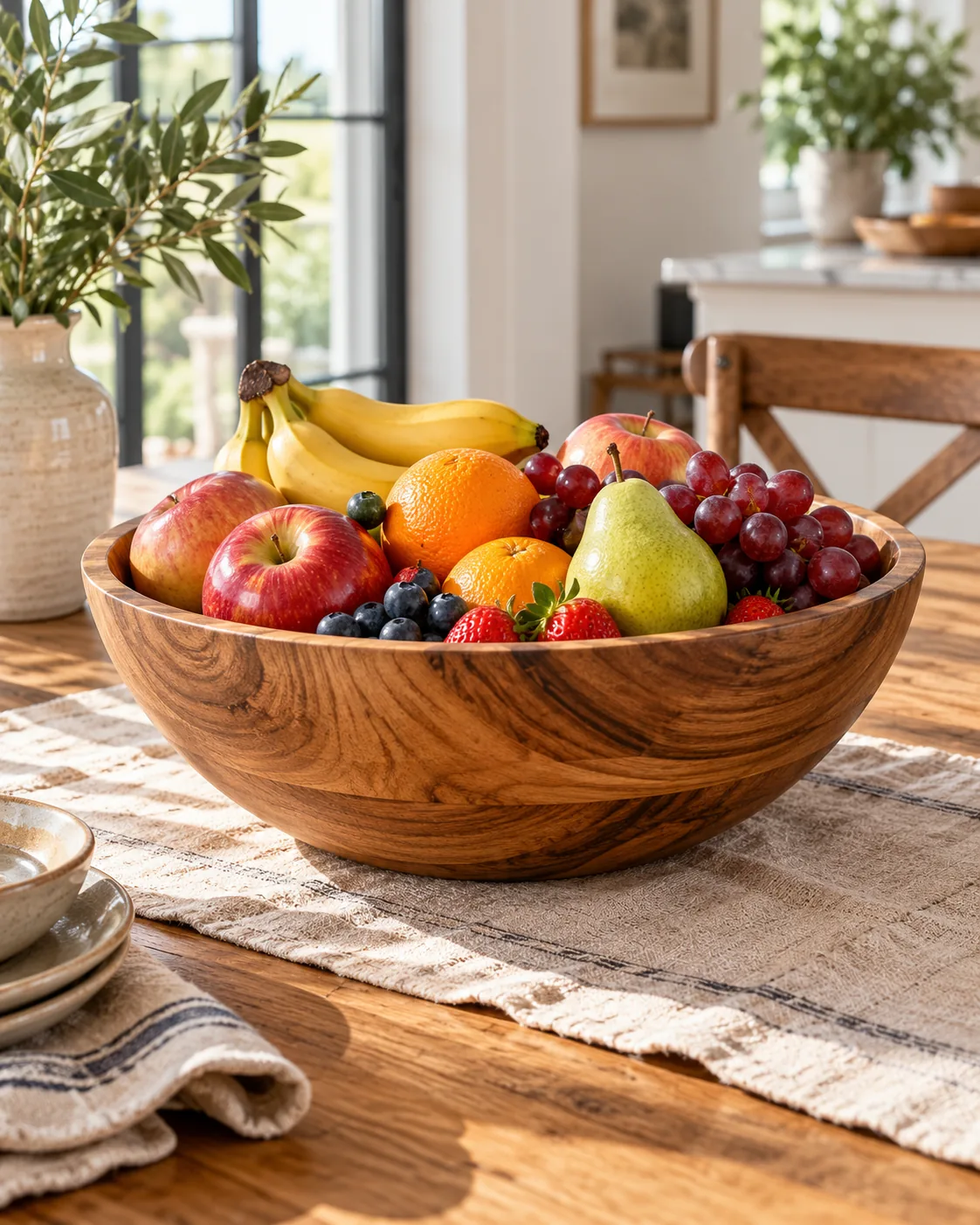
Visually, wooden bowls bring a warm, natural feel that pairs easily with many kitchen styles, whether minimalist, rustic, or modern. One large wooden bowl in the center of the dining table, filled with colorful fruit, can instantly become an appealing focal point without needing extra decoration.
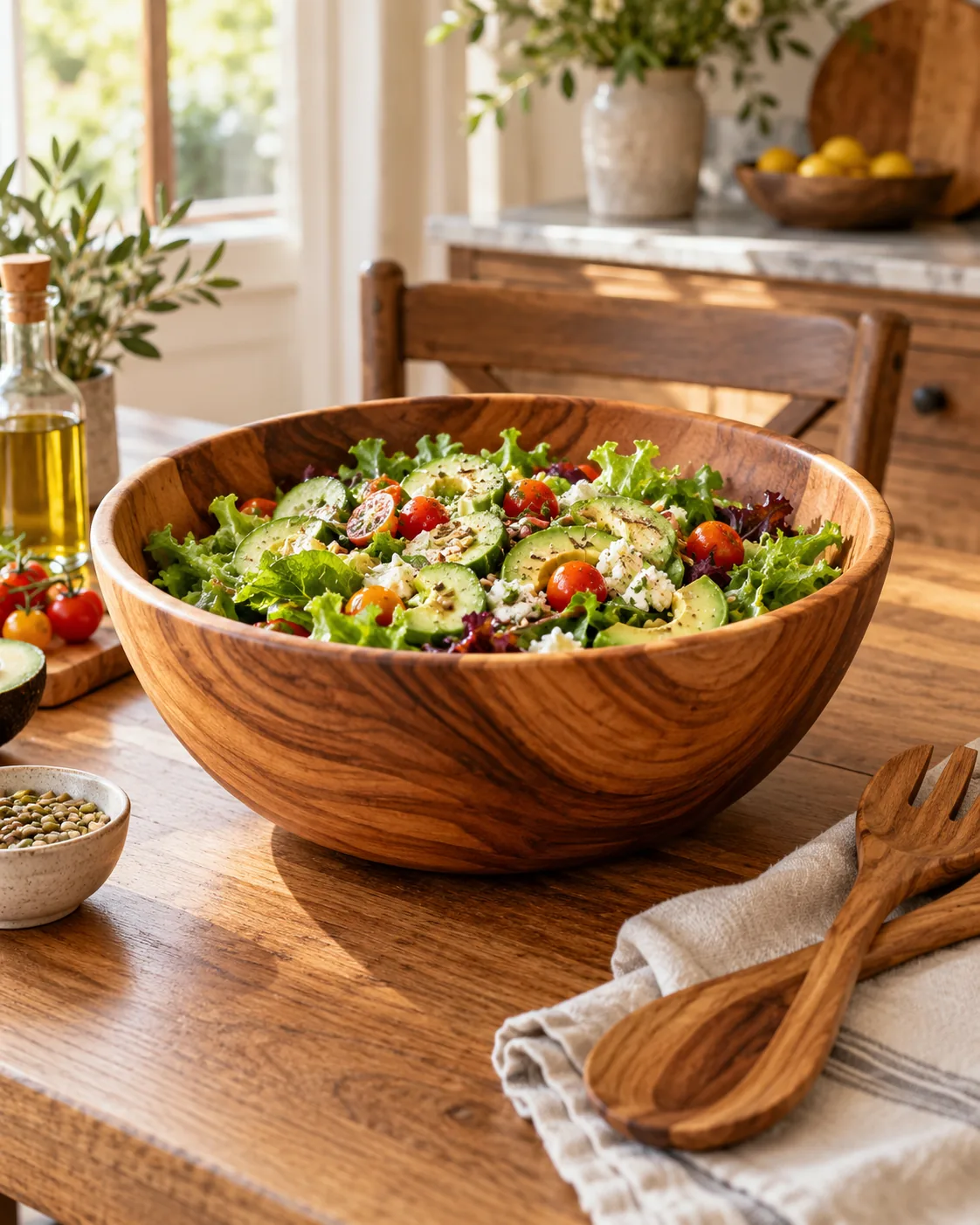
Care is simple too. Just hand wash with warm water and mild soap, dry right away, and occasionally apply a bit of wood conditioning oil to keep the surface smooth and less prone to drying out or cracking.
With this mix of function and looks, a wooden bowl is worth considering as kitchenware used every day, not just something sitting on a shelf for show.