
Why Moisture Content Matters in Wooden Kitchenware Production
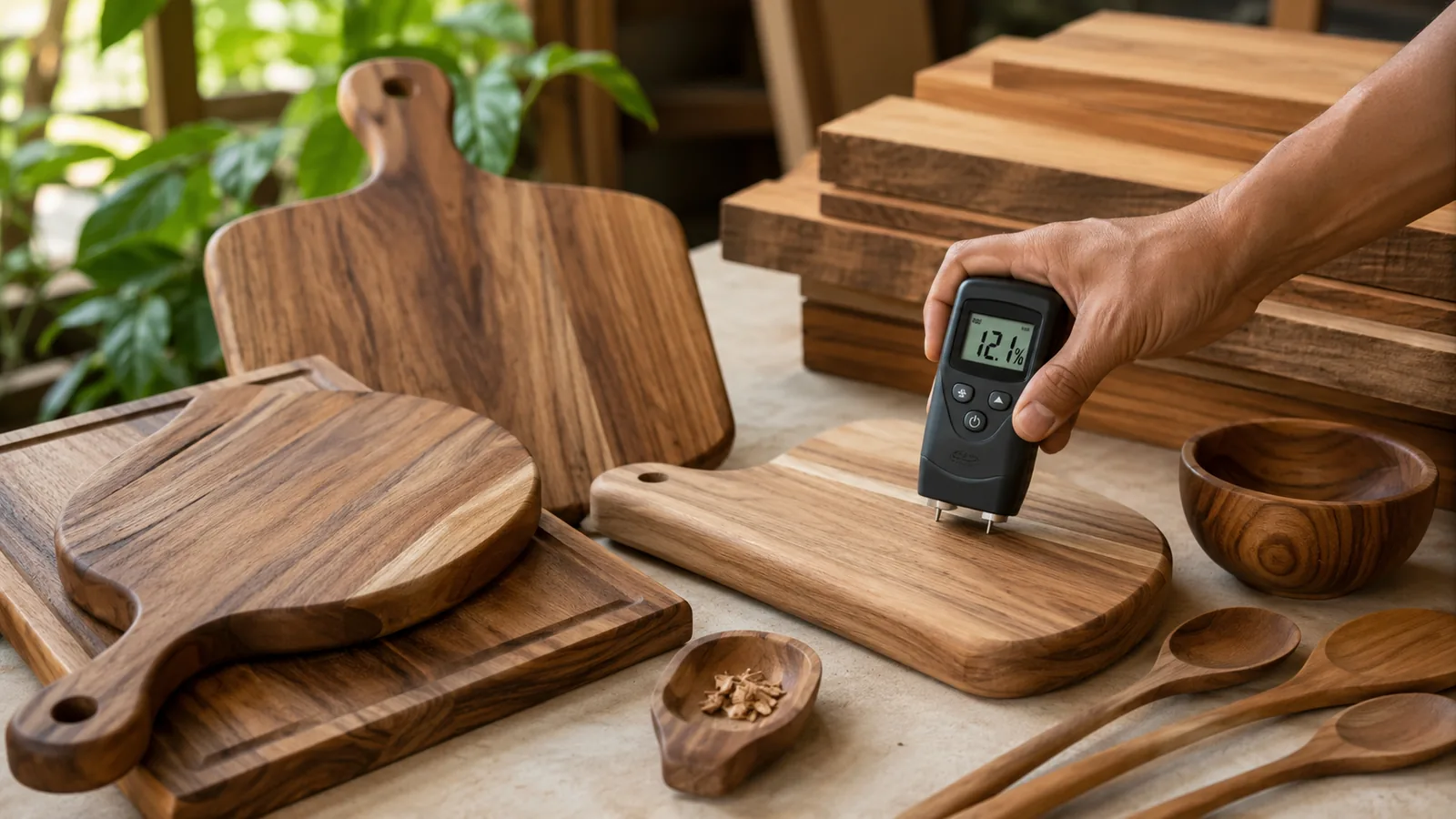
Moisture content plays an important role in the quality and stability of wooden kitchenware. Proper control helps reduce warping, cracking, and dimensional changes during production and shipping. For wholesale buyers, this small technical detail can make a big difference in product consistency.
Why Moisture Content Matters in Wooden Kitchenware Production
Wood is a natural material that continues to respond to its surrounding environment even after it has been cut and shaped. This means moisture can influence how wooden kitchenware behaves during production, storage, shipping, and everyday use. For manufacturers and wholesale buyers, controlling moisture content is therefore an important part of producing stable and consistent wooden products.
The Hidden Factor Behind Product Stability
Moisture content refers to the amount of water naturally contained inside the wood. When the moisture level changes significantly, the wood may expand, shrink, or slightly change shape. For products such as wooden cutting boards, serving boards, trays, bowls, and utensils, these changes can directly affect the final appearance and dimensions of the product. Proper drying and material preparation help create a more stable base before the wood enters the production process.
What Happens When Wood Is Too Moist?
Wood that still contains excessive moisture may look completely normal during production. Problems can appear later as the material gradually dries. Flat products such as teak cutting boards and serving boards may begin to warp, while thicker products can develop cracks or surface movement. This is why good kitchenware production does not begin only with cutting and shaping. It starts with preparing the material correctly.
Why Warping Matters for Kitchenware
Warping is especially noticeable in products with wide and flat surfaces. A cutting board that does not sit evenly on a countertop can become uncomfortable to use. The same issue can affect wooden trays, plates, and serving boards. For wholesale orders, even small dimensional differences can become a larger concern when hundreds or thousands of pieces are being produced. Controlling moisture helps improve consistency across bulk wooden kitchenware production.
Climate Changes During Export
Moisture control becomes even more important when wooden products are shipped internationally. Indonesian wooden kitchenware may leave a warm and humid environment and arrive in a destination with a much drier or colder climate. These environmental differences can influence natural wood. Preparing the timber properly before production helps reduce sudden changes when the finished products move between different climates.
Better Moisture Control, Better Consistency
Wholesale buyers usually expect the bulk order to remain close to the approved sample. Dimensions, thickness, shape, surface quality, and construction all need to remain within the agreed specifications. Stable raw material makes this easier to achieve. For a wooden kitchenware manufacturer, moisture control is therefore connected not only with durability but also with production consistency and quality control.
Teak Still Requires Proper Preparation
Indonesian teak wood is naturally known for its strength, durability, and natural oil content. However, using high-quality teak alone does not automatically guarantee a good finished product. The material still needs to be properly selected, dried, cut, sanded, and finished. Quality wooden kitchenware is the result of both good raw material and good production management.
What Wholesale Buyers Should Pay Attention To
When evaluating a wooden kitchenware supplier, buyers can look beyond appearance and price. It is useful to understand how the manufacturer prepares its wood, manages production consistency, checks finished dimensions, and controls product quality before shipment. These details become especially important for larger wholesale, retail, hospitality, and private-label orders.
From Raw Wood to Reliable Kitchenware
The quality of a finished wooden product often depends on steps that customers never see. Moisture control is one of those important behind-the-scenes processes.
At Indonesia Wood Kitchenware, careful material preparation is part of producing teak kitchenware for wholesale, hospitality, retail, and private-label projects. By paying attention to the condition of the wood before production begins, manufacturers can create products that are more stable, consistent, and ready for international markets.