
When Is a Cutting Board with a Juice Groove Worth Using?
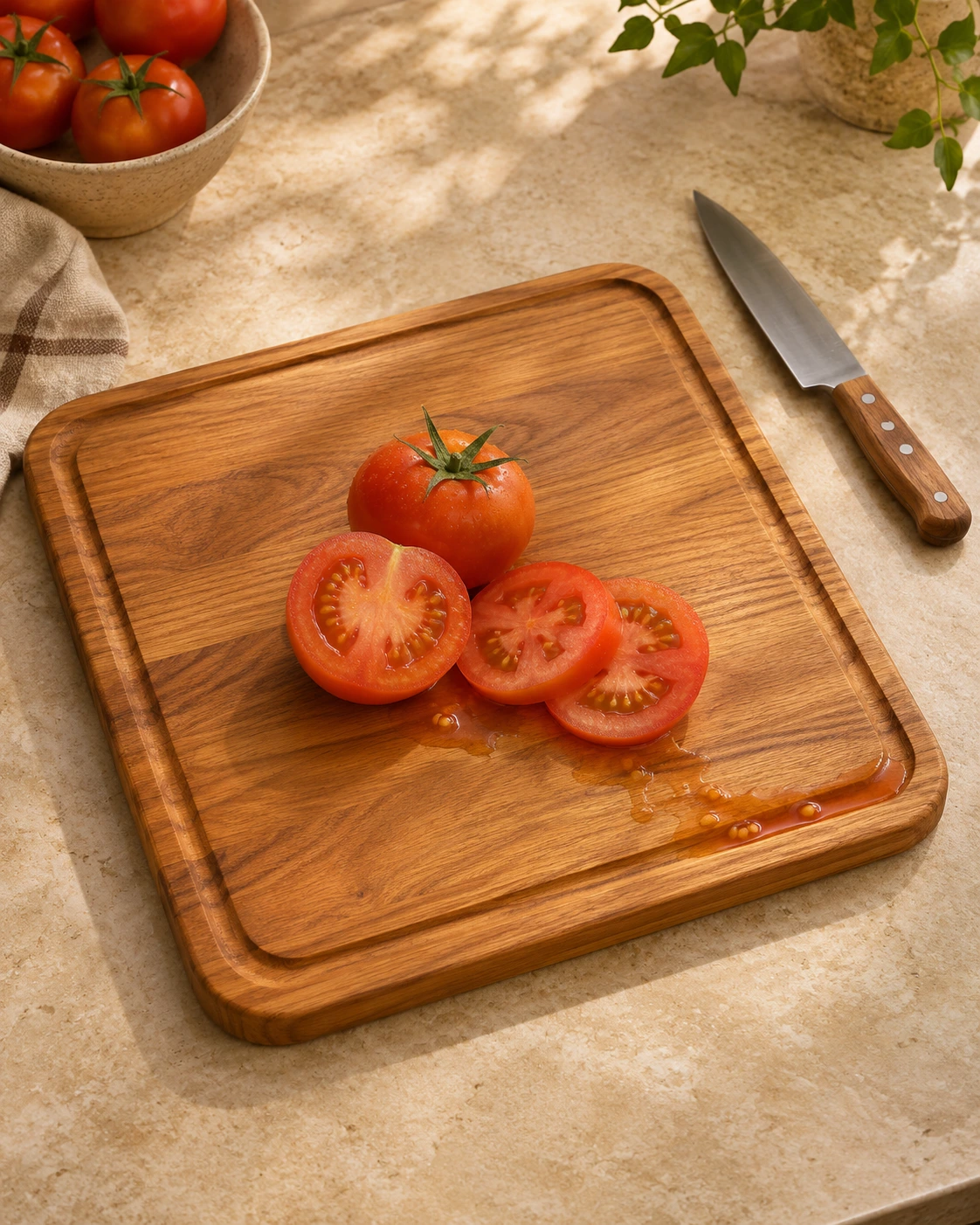
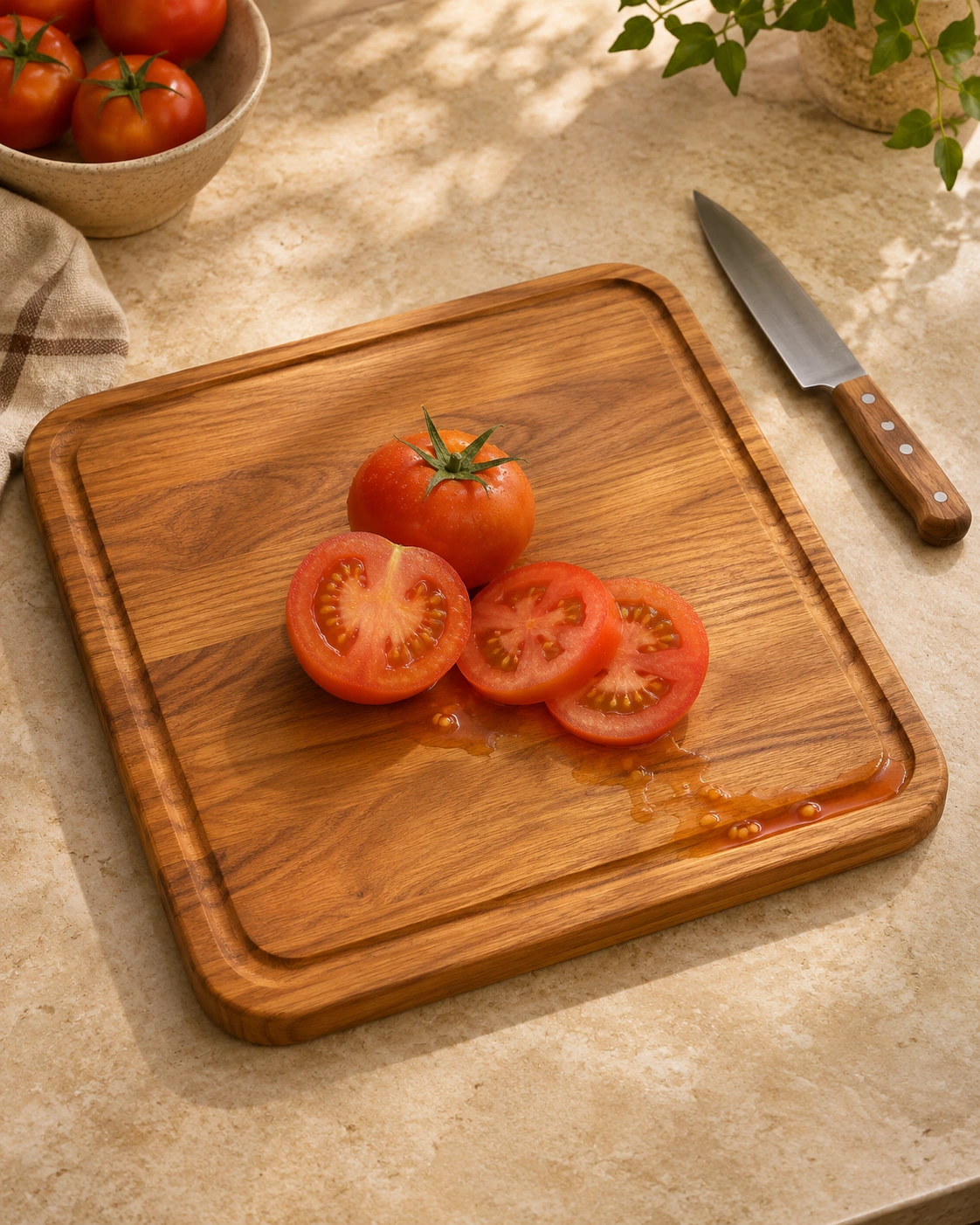
A juice groove can help contain liquid when you slice juicy fruit or carve a roast. Here’s how to decide whether it suits the way you prep food. Its purpose is easy to see when you slice a ripe tomato: instead of running straight off the edge, some of the liquid collects in the channel.
Use It for Prep That Releases Liquid
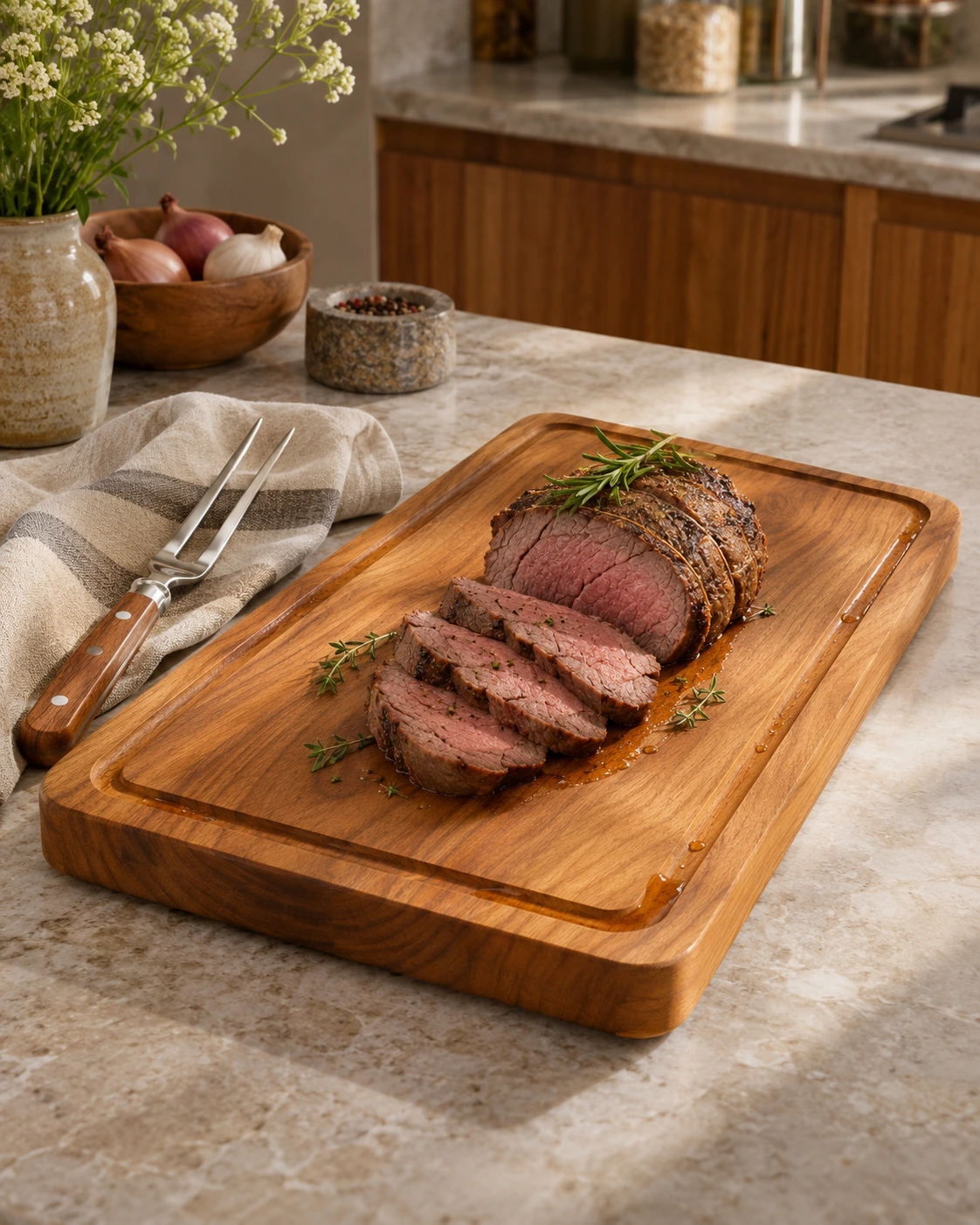
A grooved board is handy for tomatoes, citrus, watermelon, and other ingredients that leave juice behind. It can also catch some of the liquid when carving cooked meat. The channel has limited capacity, so pause and empty it if you are working through a large batch.
For dry ingredients, a flat board may be more convenient. Its uninterrupted surface makes it easier to sweep chopped herbs, breadcrumbs, or diced vegetables into a bowl.
Check the Usable Cutting Area
Two boards with the same outer dimensions can offer different amounts of room for chopping. The groove takes up part of the surface, so check the space inside it as well as the overall size. If you often slice large fruit or carve a roast, make sure there is room to position the food and move the knife comfortably.
A board with a groove on one face and a flat surface on the other can suit both tasks if both sides are designed for food preparation.
Pay Attention to the Groove During Cleaning
Food and liquid can collect in the channel, especially around corners. Clean it along with the rest of the board, following the manufacturer’s care instructions, and allow the board to dry before storing it.
Explore teak cutting boards from Indonesia Wood Kitchenware to find a shape and surface that suit the way you cook.