
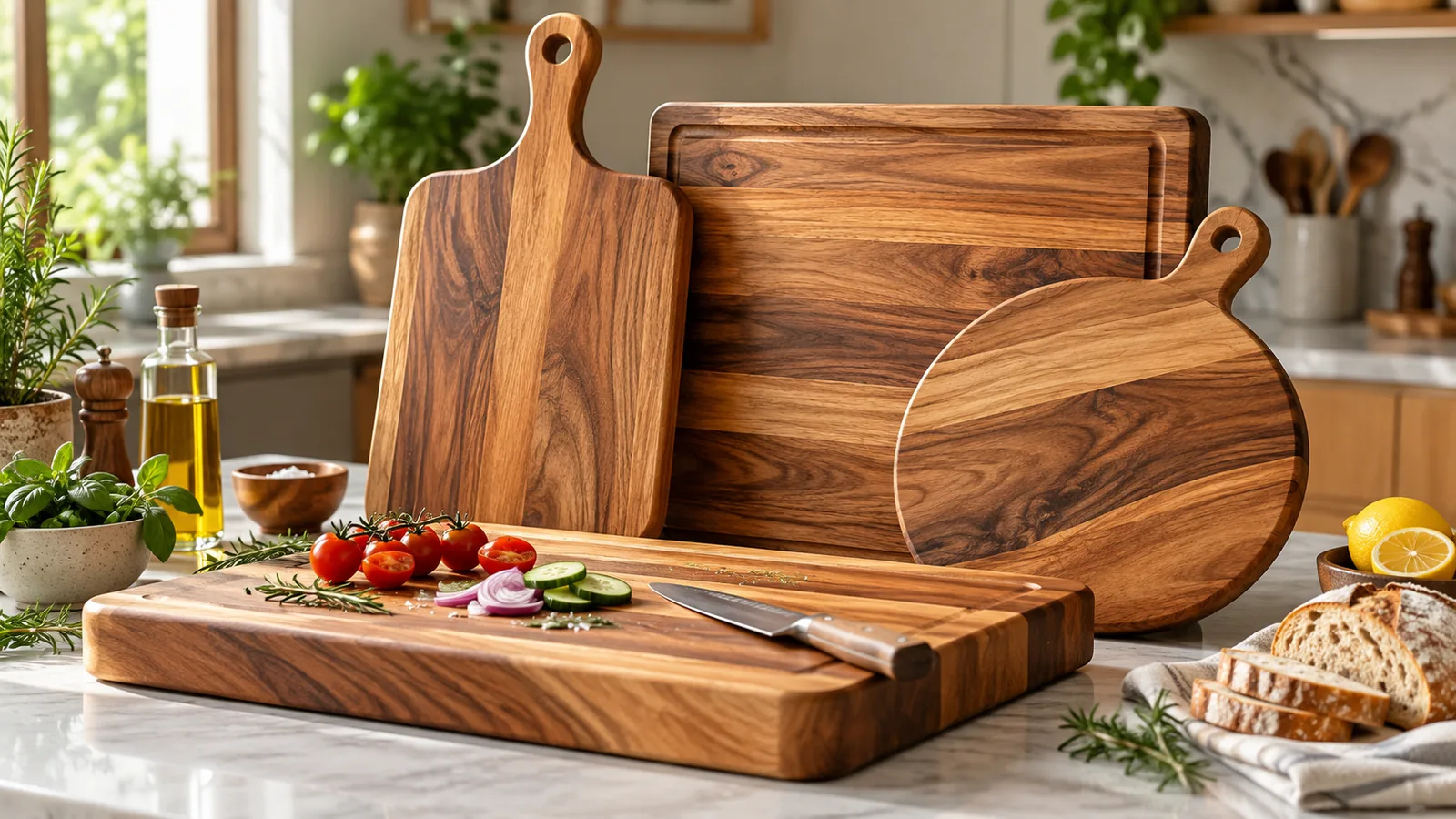
What Makes a Good Wooden Cutting Board?
A good wooden cutting board should be durable, stable, smooth, and comfortable to use. Learn what to look for when choosing a wooden cutting board, from the type of wood and thickness to the finish and overall construction.
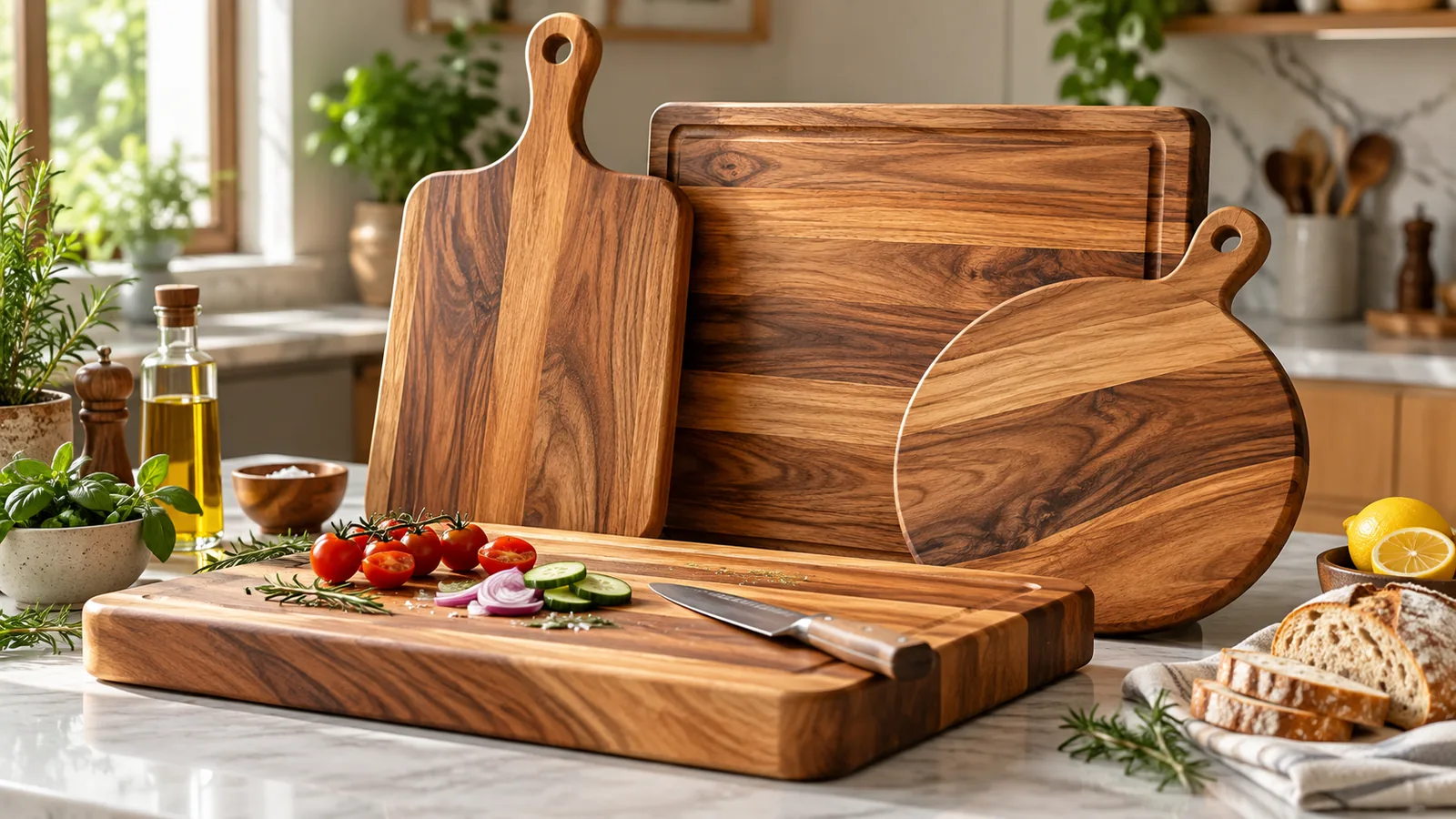
1. Choose the Right Type of Wood
The type of wood is one of the most important factors when choosing a cutting board. Different woods have different levels of hardness, grain patterns, durability, and appearance.
Teak, acacia, and other suitable hardwoods are commonly used for wooden cutting boards because they offer a good balance of durability and natural beauty.
The right wood should be strong enough for regular cutting while still providing a suitable surface for kitchen knives.
2. Look for a Stable Construction
A good cutting board should remain stable during use. A board that moves or slides easily can make food preparation uncomfortable and potentially unsafe.
The quality of the wood, drying process, and construction all contribute to the stability of the finished product.
Properly dried wood is especially important because excessive moisture can cause the board to warp or change shape over time.
3. Consider the Thickness
The thickness of a cutting board affects its weight, stability, and durability.
A thicker board generally feels more solid and stable on the kitchen counter. It can also be suitable for heavier everyday use.
Thinner boards, on the other hand, are lighter and easier to store or move around. The best thickness depends on how the cutting board will be used.
4. Pay Attention to the Surface
The surface should be smooth and properly finished. A good-quality cutting board should not have rough areas, sharp edges, or uneven surfaces.
A smooth surface also makes the board more comfortable to use and easier to clean after food preparation.
5. Consider the Grain
The natural grain of the wood is not only important for appearance. It also contributes to the character of the cutting board.
Every piece of natural wood has its own grain pattern and color, which means each cutting board can have a slightly different appearance.
This natural variation is one of the reasons wooden cutting boards are popular for both kitchens and food presentation.
6. Choose a Practical Size
Cutting boards are available in many different sizes. The right size depends on your kitchen and the type of food you usually prepare.
A larger board provides more working space for vegetables, meat, bread, and other ingredients. Smaller boards are easier to store and can be useful for quick preparation.
For restaurants and professional kitchens, different sizes may be needed for different preparation tasks.
7. Check the Edges and Details
Small design details can make a cutting board more practical. Rounded edges can make the board more comfortable to handle, while handles or grip areas can make it easier to carry.
Some cutting boards also include juice grooves to help collect liquid from fruits, vegetables, or meat.
The design should match the intended use rather than simply focusing on appearance.
8. Look for Suitable Finishing
The finishing should be appropriate for a product that comes into contact with food. A suitable food-safe finish can help protect the wood while maintaining its natural appearance.
The finish should also be applied evenly, without leaving rough or overly sticky areas on the surface.
9. Think About Maintenance
Even a high-quality cutting board needs proper care. Wooden cutting boards should generally be washed by hand and dried properly after use.
Avoid soaking the board for long periods or placing it in the dishwasher, as excessive water and heat can affect the wood.
Regular maintenance can help keep the board smooth and attractive for longer.
10. Quality Craftsmanship Matters
The quality of the final cutting board depends on more than just the type of wood. Careful material selection, proper drying, precise cutting, sanding, finishing, and quality control all play an important role.
A well-made cutting board should feel solid, smooth, and comfortable to use.
Wooden Cutting Boards for Businesses
Wooden cutting boards are also popular for restaurants, cafés, hotels, and retailers. Businesses can choose different sizes and designs depending on their needs.
Custom options such as logo engraving, CNC designs, special shapes, and custom packaging can also be used to create products that match a brand's identity.
For retailers, customized cutting boards can become part of a wider wooden kitchenware collection or private-label product range.
Choosing a Cutting Board That Lasts
A good wooden cutting board is a combination of quality wood, stable construction, practical design, smooth finishing, and proper care.
Whether you are choosing one for your home or sourcing cutting boards for a business, paying attention to these details can help you find a product that is both functional and attractive.
At Indonesia Wood Kitchenware, we produce wooden cutting boards using carefully selected materials and Indonesian craftsmanship. Our cutting boards can be developed in different sizes, shapes, designs, and specifications for homes, retailers, restaurants, hotels, and private-label brands.