
Understanding Which Oils Are Safe for Caring for Wooden Kitchen Tools
This article explains which oils are safe for caring for wooden kitchen tools, including food grade mineral oil and flaxseed oil, and why regular cooking oils should be avoided for long term care.
Caring for wooden kitchen tools isn't complete without knowing which oil is right to use. Many people still mix up which oils are food safe and which ones to avoid, and choosing the wrong one can cause wooden tools to wear out quickly or even become unsafe to use.
Food grade mineral oil is one of the most common and safe choices for cutting boards, bowls, or wooden spoons. It's odorless, resists going rancid, and effectively keeps the wood's moisture locked in from within, without leaving behind any taste or residue that could be a problem when it touches food.
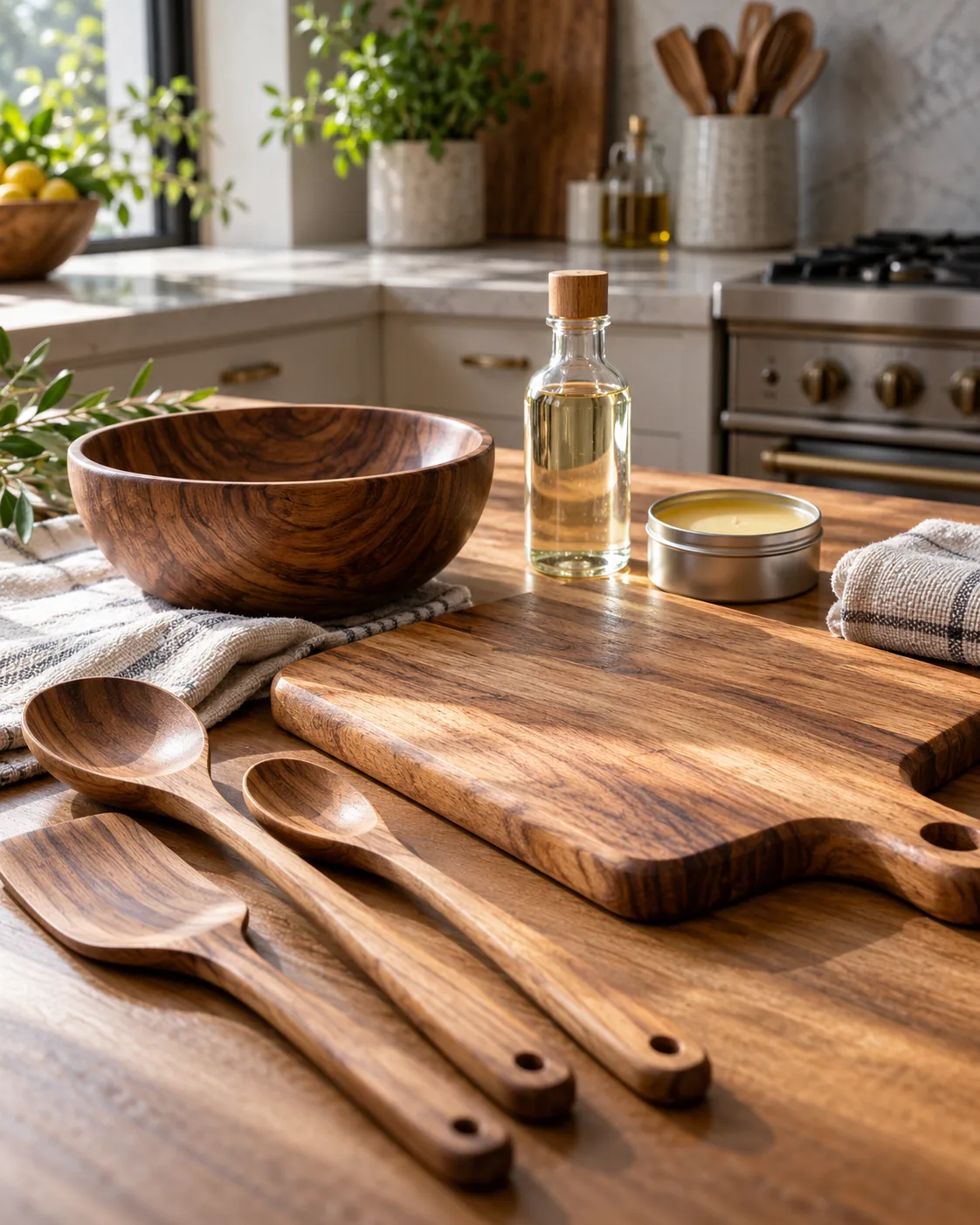
Besides mineral oil, there are also plant based options like flaxseed oil that's been specially processed for wood, or a blend of oil and beeswax that forms a longer lasting protective layer. These types are often used for wooden tools that come into contact with water more frequently, like a cutting board used every day.
On the other hand, oils best avoided are regular cooking oils such as vegetable oil, olive oil, or coconut oil for long term use. These oils are safe to eat, but they tend to go rancid over time since they contain fats that oxidize, which can actually leave wooden tools smelling unpleasant after a few weeks.
How the oil is applied matters too. Make sure the wooden tool is clean and dry, then spread the oil evenly with a soft cloth, let it soak in for a few hours or overnight, then wipe away any oil that hasn't absorbed so the surface doesn't feel sticky.
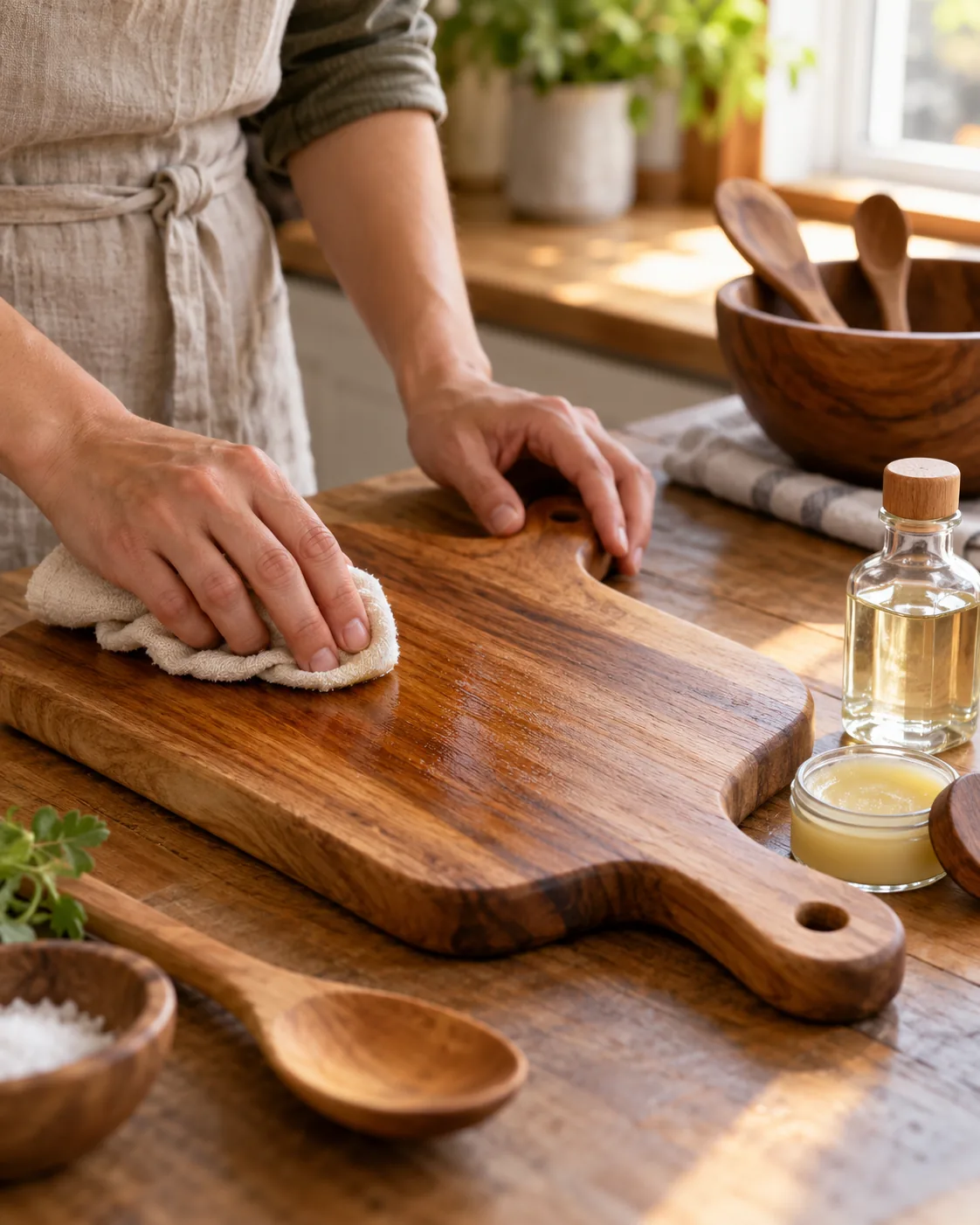
By choosing the right oil and applying it regularly, wooden kitchen tools can stay durable, safe to use, and looking fresh even after years of daily use.