
Understanding the Difference Between Wooden Cooking Tools and Serving Tools
This article breaks down the difference between wooden cooking tools and serving tools, covering material, shape, and how they're used, so each piece can be used for its intended purpose and last longer.
Not all wooden kitchen tools are made for the same purpose. Some are designed to help with cooking, while others are meant for serving food at the table. Understanding this difference can help you pick the right tools, and also keep them lasting longer since they're used the way they're meant to be.
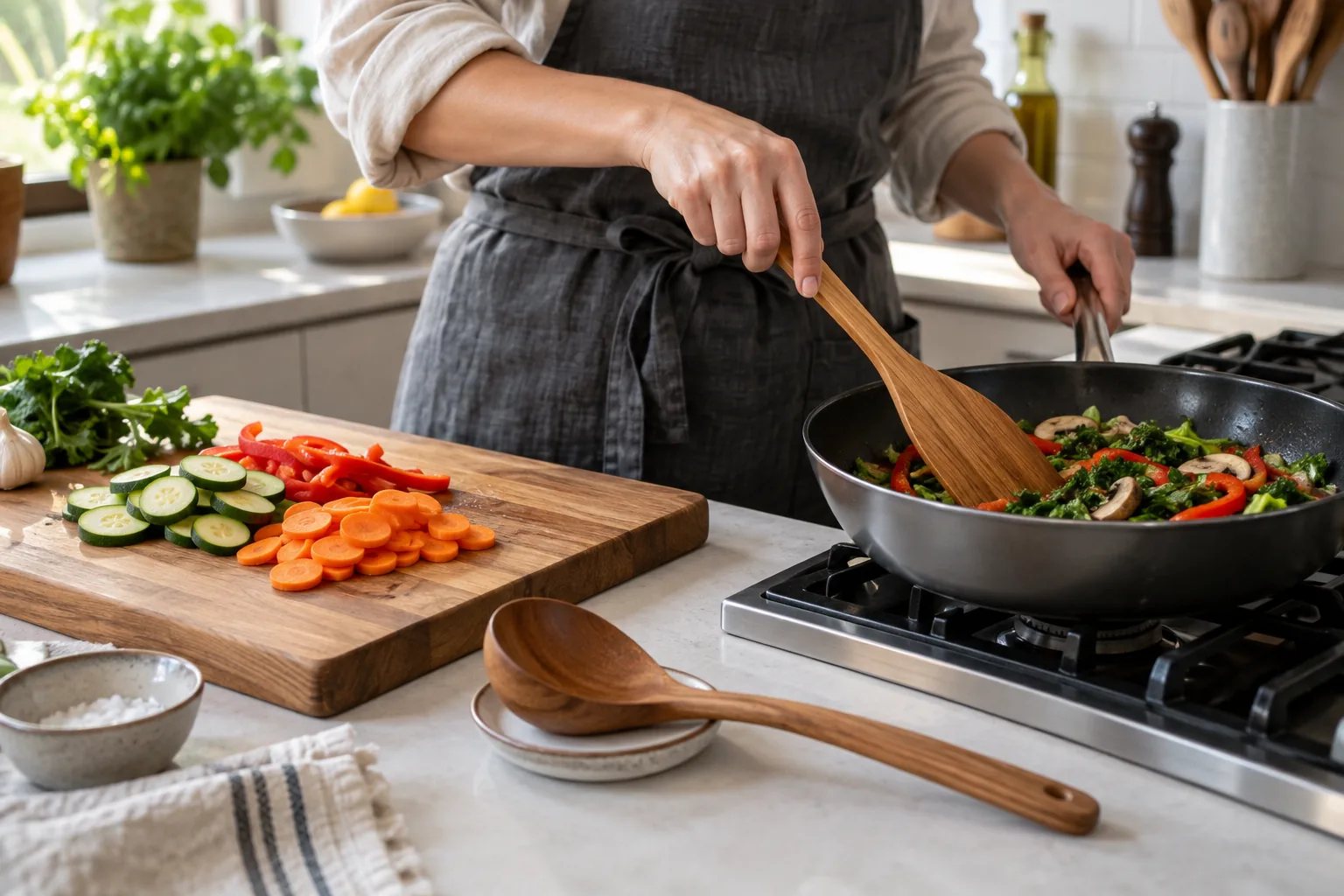
Cooking tools, like spatulas, ladles, and cutting boards, are usually made from denser wood that holds up to heat and repeated friction. Teak is often chosen for this category because of its strength, so it doesn't crack easily even with regular contact with hot pots or sharp knives.
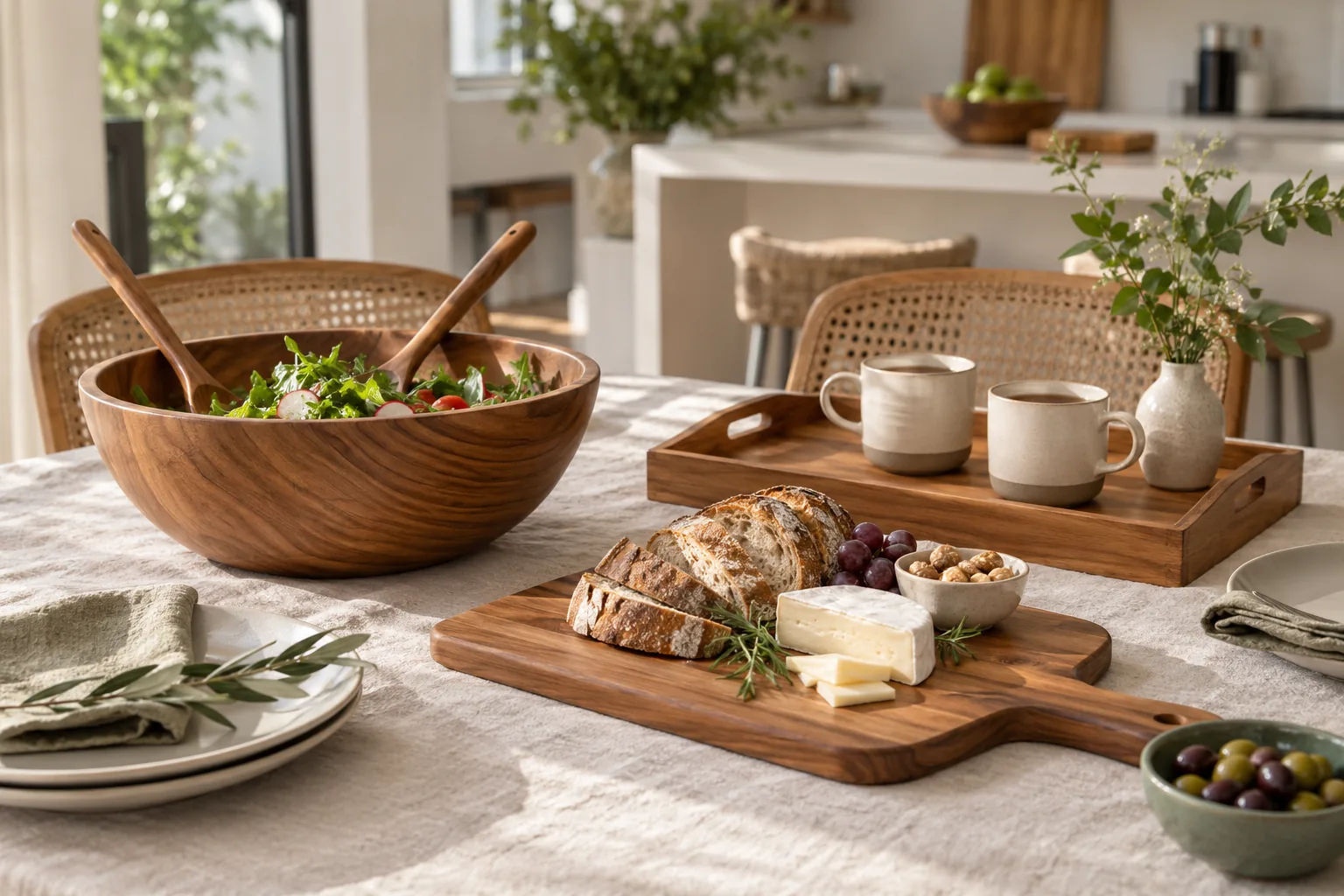
Serving tools, on the other hand, like serving boards, trays, or salad bowls, lean more into aesthetics. Their shapes tend to be more detailed, with a smooth finish that feels good to hold and looks good on the table. These pieces usually aren't exposed to direct heat as often, so they can use wood with more varied grain patterns purely for visual appeal.
Knowing this difference matters especially when setting up a kitchen or dining table. A cutting board that's already been used for raw ingredients shouldn't go straight to serving cooked food, for the sake of cleanliness and hygiene. On the flip side, a more decorative serving board shouldn't be used to cut anything hard or hot, since that can damage its smooth surface.
By separating use based on function, wooden kitchen tools not only last longer but are also safer to use day to day, while giving both the kitchen and dining table a neater, more organized feel.