
The Manufacturing Process of Wooden Cutting Boards
From selecting the right timber to the final finishing and quality inspection, every stage plays an important role in creating a high-quality wooden cutting board. Discover how natural wood is carefully transformed into a durable, functional, and beautifully crafted kitchen essential.
A wooden cutting board may look like a simple kitchen essential, but creating a high-quality product involves several carefully controlled stages. From selecting the right wood to cutting, shaping, sanding, and finishing, every step can influence the board's durability, appearance, and performance.
Understanding the manufacturing process also helps buyers, retailers, and brands appreciate the craftsmanship and quality behind a well-made wooden cutting board.
1. Selecting the Right Wood
The manufacturing process begins with choosing suitable wood. The species, grade, moisture content, grain pattern, and overall condition of the timber all influence the quality of the finished cutting board.
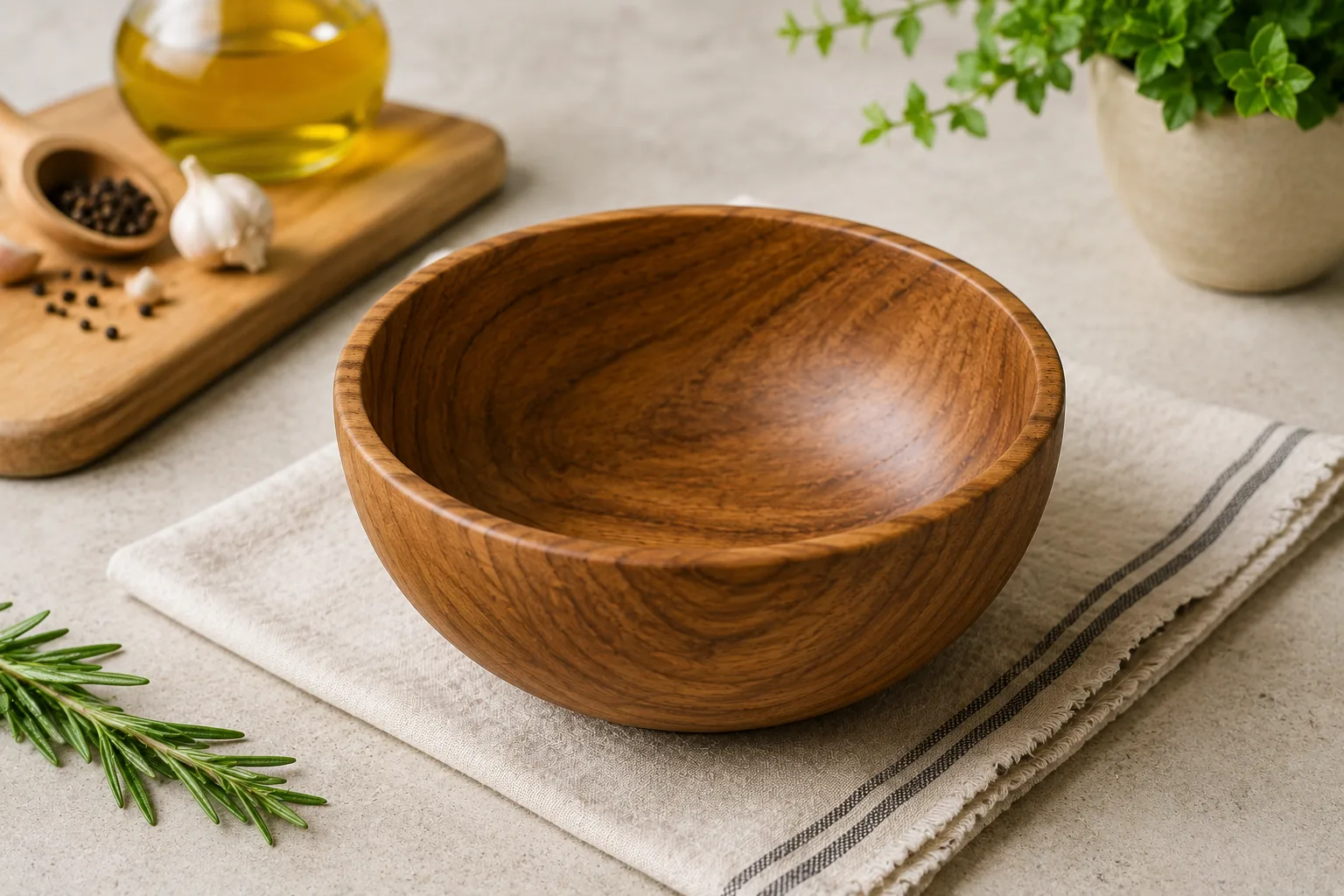
Hardwoods such as teak and acacia are popular choices because they offer a good combination of durability, stability, and attractive natural grain.
For professional manufacturers, wood selection is especially important because consistent raw material quality helps produce cutting boards with more consistent specifications.
2. Preparing and Drying the Wood
Before the wood can be turned into a cutting board, it needs to be properly prepared.
Freshly processed timber can contain significant amounts of moisture. If the moisture content is too high, the wood may shrink, expand, warp, or develop cracks after the product has been manufactured.
Depending on the production process, timber may undergo kiln drying or other controlled drying methods to bring the moisture content to a suitable level.
Proper moisture control is one of the most important factors in producing stable wooden kitchenware.
3. Cutting the Timber
Once the wood has been properly prepared, it is cut into pieces according to the required dimensions.
The cutting stage determines the initial length, width, and thickness of the board. Manufacturers also consider the direction of the grain and the quality of each piece when preparing the material.
For custom orders, the cutting dimensions can be adjusted according to the buyer's specifications.
4. Selecting and Arranging the Pieces
For certain cutting boards, particularly laminated or edge-grain designs, several pieces of wood may be arranged and joined together.
The pieces can be selected based on their grain direction, color, size, and overall appearance.
Careful arrangement can create an attractive visual pattern while helping maintain the structural integrity of the finished board.
This stage also provides opportunities for manufacturers to create custom designs and patterns for different brands or product collections.
5. Gluing and Pressing
When a cutting board consists of multiple pieces, the selected pieces are joined using an appropriate adhesive.
The wood pieces are carefully aligned before being placed under pressure. Controlled pressing helps create a strong and stable connection between the individual components.
The adhesive used for food-contact products should be appropriate for the intended application and comply with the relevant requirements of the target market.
6. Shaping the Cutting Board
After the pieces have been joined and the structure is stable, the board is shaped into its final form.
Depending on the design, manufacturers may create:
Rectangular cutting boards
Round cutting boards
Oval boards
Paddle-shaped boards
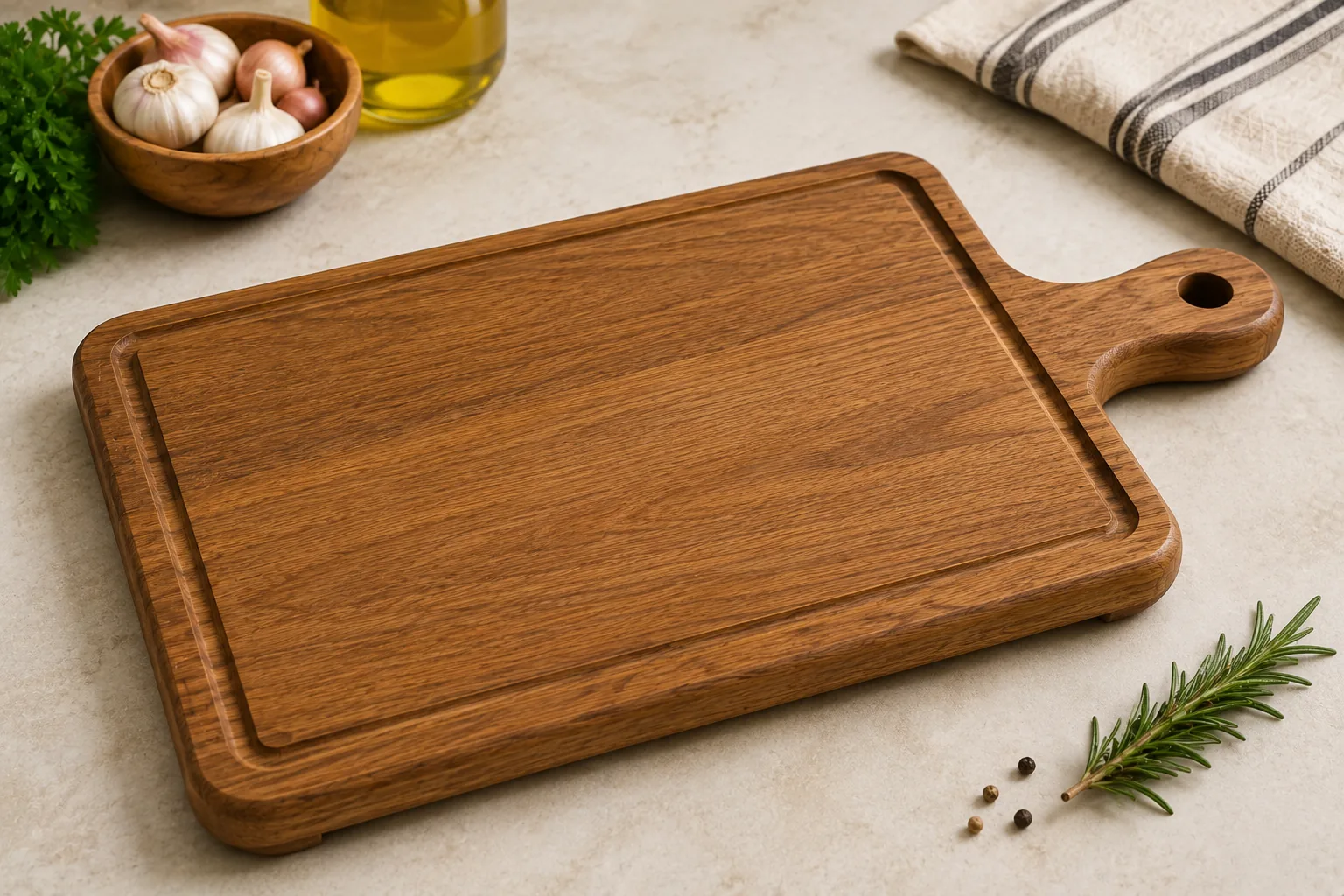
Boards with handles
Serving and cutting board combinations
Custom shapes
Modern machinery can help achieve accurate dimensions, while skilled workers can refine edges and details.
7. Sanding the Surface
Sanding is an important part of the manufacturing process.
The board is gradually sanded to create a smooth surface and remove rough areas or machining marks. Different sanding stages may be used to achieve the desired smoothness.
For kitchenware, a well-finished surface is particularly important because the product is handled frequently and comes into contact with food.
The final appearance of the wood grain also becomes more visible as the surface is properly sanded.
8. Creating the Final Details
Depending on the product design, additional details may be added at this stage.
These can include:
Handles
Hanging holes
Rounded corners
Juice grooves
Engraved logos
CNC designs
Custom patterns
For brands and retailers, customized details can help create a unique product that matches their identity.
CNC engraving, for example, can be used to add a company logo, brand name, decorative pattern, or other design element.
9. Applying a Food-Safe Finish
After the board has been thoroughly sanded and prepared, an appropriate finish may be applied.
For products intended for direct food contact, the finishing system should be suitable for food-contact applications and meet the requirements of the intended market.
The finish can help enhance the natural appearance of the wood while providing protection against everyday use.
The specific treatment depends on the wood species, product design, customer requirements, and intended use.
10. Quality Control
Before packaging, each cutting board should undergo quality inspection.
Manufacturers may check:
Dimensions
Surface smoothness
Cracks or defects
Warping
Glue joints
Edge quality
Finish consistency
Overall appearance
Quality control is particularly important for wholesale and export orders, where customers often require consistent specifications across large quantities.
11. Cleaning and Final Preparation
After finishing and inspection, the cutting boards are prepared for packaging.
The products should be clean, dry, and free from excessive dust or production residue. Depending on the customer's requirements, additional labeling, barcodes, protective packaging, or individual boxes may also be added.
For export orders, packaging is especially important because the products may need to travel long distances and pass through different handling conditions.
12. Packaging for Domestic and International Markets
Wooden cutting boards can be packaged in several ways depending on the target market and sales channel.
Retail products may use individual boxes, paper packaging, sleeves, or branded packaging. Wholesale orders may use bulk cartons or customized packaging.
For international buyers, packaging requirements can also include product labels, care instructions, barcode placement, carton specifications, and shipping marks.
Working with the buyer early in the production process helps ensure the packaging meets the requirements of the destination market.
What Makes a High-Quality Wooden Cutting Board?
A quality cutting board is not determined by the wood species alone.
Several factors work together, including:
Quality of the timber
Suitable and properly selected wood provides a strong foundation for the product.
Proper moisture control
Correctly dried wood can help reduce excessive movement and improve stability.
Precise manufacturing
Accurate cutting, joining, shaping, and sanding contribute to a consistent final product.
Appropriate finishing
A suitable finish can enhance the wood while supporting the product's intended use.
Quality control
Inspection at different stages helps identify defects before products reach the customer.
Why Indonesian Wooden Cutting Boards Are Popular
Indonesia has a long history of woodworking and furniture production. Skilled craftsmen and established manufacturers have experience transforming local and imported wood species into a wide range of products.
Indonesian manufacturers can produce wooden cutting boards in different wood species, sizes, shapes, finishes, and designs.
For international buyers, this flexibility can be particularly useful when developing private-label collections or customized kitchenware products.