
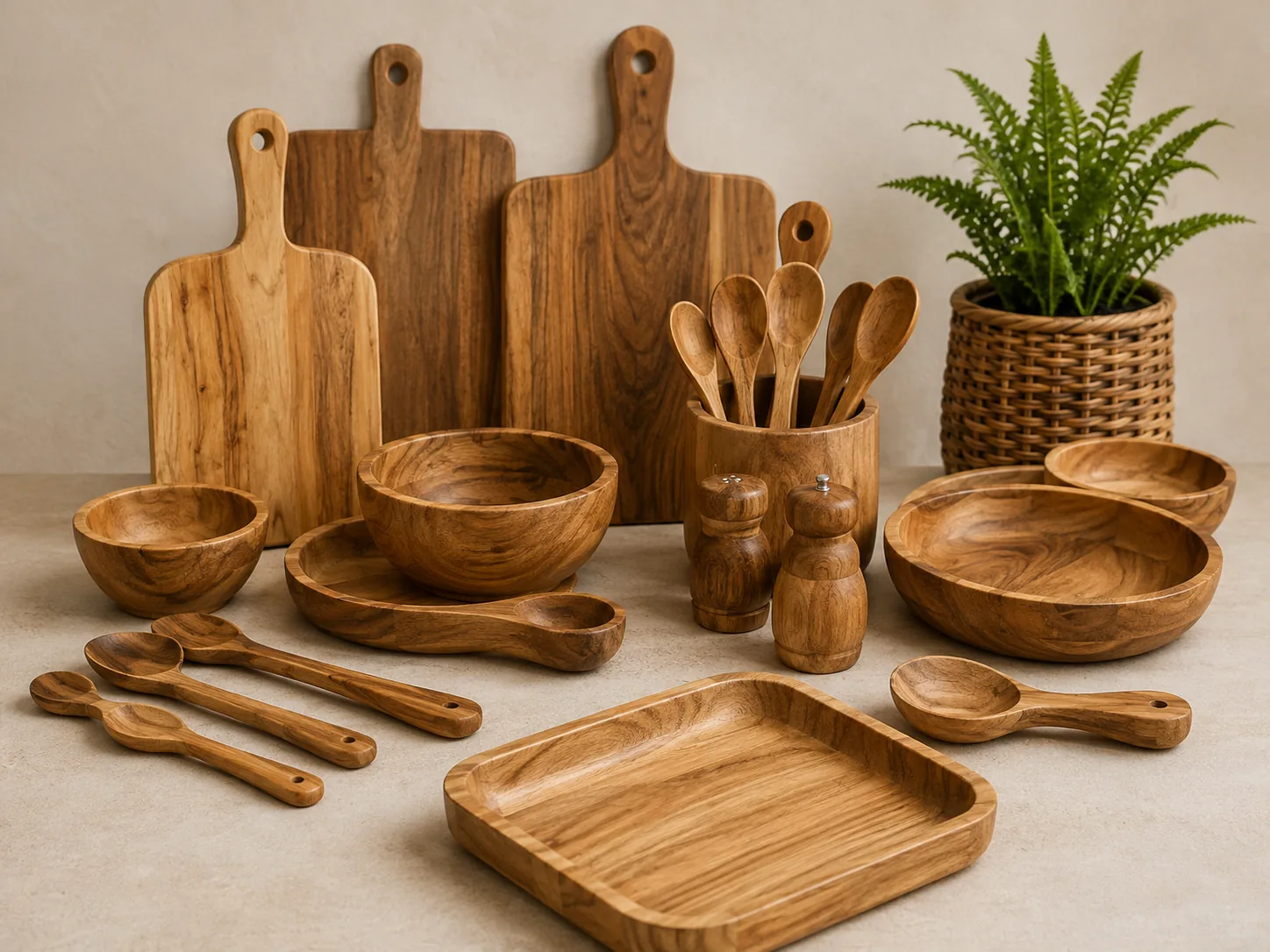
How Wooden Kitchenware is Made in Indonesia
From carefully selecting and preparing the timber to shaping, sanding, finishing, and quality control, every stage contributes to the final quality of Indonesian wooden kitchenware. Discover how skilled craftsmanship and modern manufacturing come together to transform natural wood into functional products for homes and
Indonesia has a long tradition of woodworking and craftsmanship, with skilled makers transforming natural timber into functional products for homes, restaurants, hospitality businesses, and retailers around the world.
Wooden kitchenware may look simple, but producing a quality product requires careful attention at every stage. From selecting the right timber to shaping, sanding, finishing, and final inspection, each step contributes to the quality, appearance, and durability of the finished product.
The Importance of Choosing the Right Wood
The manufacturing process begins with selecting suitable timber for the intended product.
Different wood species have different characteristics, including hardness, grain pattern, color, moisture resistance, stability, and workability. Teak and acacia, for example, are popular choices for wooden kitchenware because of their attractive appearance and durability.
The choice of wood can also depend on the type of product being manufactured. A cutting board may require different characteristics from a lightweight serving tray or decorative kitchen accessory.
For international orders, manufacturers may also work with buyers to select the wood species based on product specifications, target market, design, and budget.
1. Preparing the Timber
After the wood is selected, it needs to be prepared for production.
The timber is cut into suitable sections and checked for quality. Depending on the manufacturing process, defects or unsuitable areas may be removed before the material moves to the next stage.
Proper preparation helps manufacturers achieve more consistent dimensions and reduce material problems during production.
2. Drying and Moisture Control
Moisture content is an important consideration when manufacturing wooden kitchenware.
Wood naturally contains moisture, and its dimensions can change as moisture levels change. If timber is not properly dried before production, the finished product may be more likely to experience movement, cracking, or warping.
Manufacturers may use controlled drying or kiln-drying processes to bring the timber to a suitable moisture level before further processing.
Proper moisture control is especially important for products intended for international markets, where the destination climate may differ significantly from Indonesia.
3. Cutting and Shaping
Once the timber is prepared, it is cut and shaped according to the product design.
Modern machinery can help manufacturers achieve accurate dimensions and consistent shapes across larger production quantities. Depending on the product, cutting and shaping may involve saws, routers, CNC machines, lathes, or other woodworking equipment.
For products with more complex shapes, machinery can be combined with skilled handwork to achieve the desired details.
4. Creating Different Types of Kitchenware
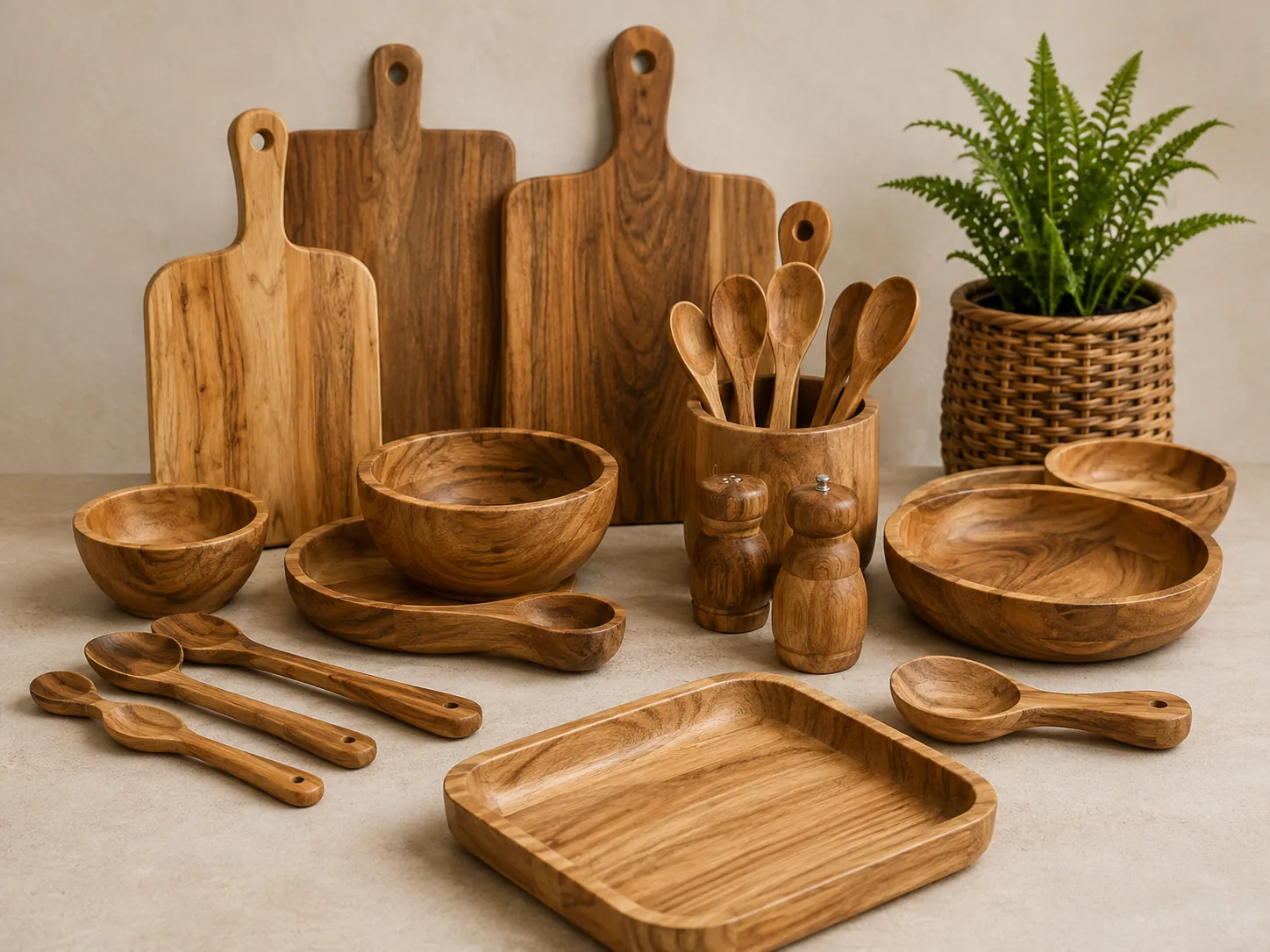
Indonesia's woodworking industry can produce a wide variety of wooden kitchenware.
Common products include:
Cutting boards
Serving trays
Wooden bowls
Wooden spoons
Spatulas
Salad servers
Utensil holders
Salt and pepper sets
Serving boards
Kitchen organizers
Each product requires its own combination of cutting, shaping, sanding, assembly, and finishing techniques.
5. Sanding and Surface Preparation
After the main shape has been created, the product is carefully sanded.
Sanding removes rough areas and machining marks while creating a smooth surface that is comfortable to handle.
For kitchenware, surface preparation is particularly important because many products are handled frequently and may come into direct contact with food.
Sanding can also enhance the natural grain of the wood, allowing its color and texture to become more visible.
6. Assembly
Some wooden kitchenware products are made from a single piece of timber, while others require multiple components.
Products such as trays, boxes, serving sets, and certain cutting boards may involve several wooden pieces that need to be carefully joined together.
Precision during assembly helps ensure that the finished product is stable, functional, and visually consistent.
7. Adding Custom Details
One of the advantages of working with wooden products is the ability to customize their design.
Manufacturers can produce different shapes, dimensions, thicknesses, handles, patterns, and other details according to the buyer's requirements.
For brands and retailers, additional customization can include:
Laser engraving
CNC engraving
Brand logos
Custom shapes
Special dimensions
Product sets
Custom packaging
These options allow businesses to develop products that are aligned with their own brand identity.
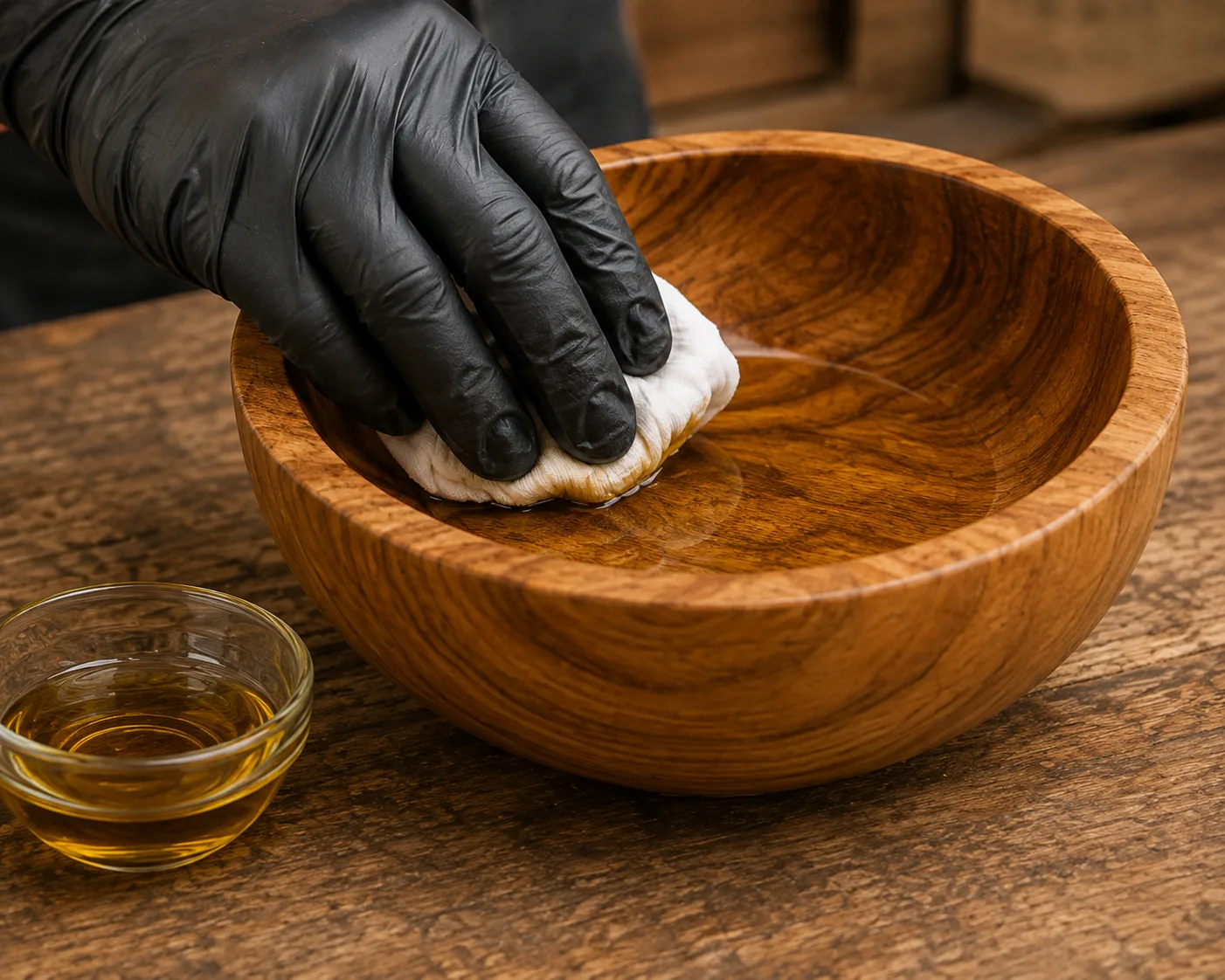
8. Applying the Finish
Once the product has been sanded and assembled, the appropriate finishing process is applied.
The finish can enhance the natural appearance of the wood while helping protect the surface during everyday use.
For products intended for food contact, the finishing system should be appropriate for that application and comply with the requirements of the intended market.
The choice of finish may depend on the wood species, product type, desired appearance, and buyer requirements.
9. Quality Control
Quality control is an important part of the manufacturing process.
Before products are packed, manufacturers may inspect them for:
Correct dimensions
Surface smoothness
Cracks or defects
Warping
Joint quality
Finish consistency
Overall appearance
Product functionality
For wholesale and export orders, quality control becomes even more important because buyers often require consistent specifications across hundreds or thousands of pieces.
10. Packaging
After passing quality inspection, wooden kitchenware is prepared for packaging.
Packaging requirements vary depending on the product and target market. Retail products may require individual boxes, sleeves, labels, barcodes, or branded packaging, while bulk orders may use larger cartons.
International buyers may also request customized packaging that matches their retail requirements.
Proper packaging helps protect wooden kitchenware during transportation and can also improve the presentation of the final product.
Indonesian Craftsmanship Meets Modern Manufacturing
One of the strengths of Indonesian wooden kitchenware production is the combination of traditional craftsmanship and modern manufacturing.
Modern machinery can improve accuracy and production efficiency, while skilled craftsmen contribute their experience to detailed shaping, sanding, finishing, assembly, and quality inspection.
This combination allows manufacturers to produce both handcrafted-looking products and larger quantities with consistent specifications.
Why Source Wooden Kitchenware from Indonesia?
Indonesia offers several advantages for businesses looking to source wooden kitchenware.
The country has an established woodworking industry, experienced craftsmen, a wide range of wooden product capabilities, and manufacturers familiar with international orders.
Depending on the supplier, buyers may be able to develop standard products or customized collections for their own brands.
For businesses, sourcing directly from an Indonesian manufacturer can also provide opportunities to discuss product specifications, packaging, branding, and production requirements from the beginning of the project.
Private Label and Custom Wooden Kitchenware
Wooden kitchenware can be an attractive category for private-label brands because products can be customized in many ways.
A buyer may develop a collection based on their own:
Brand identity
Product dimensions
Wood species
Design
Logo
Finish
Packaging
Product combinations
For example, a brand could create a coordinated collection consisting of cutting boards, serving trays, bowls, and utensils using a consistent wood species and visual style.
Quality Starts with the Manufacturing Process
The final quality of wooden kitchenware depends on many factors, not just the appearance of the finished product.
Good material selection, proper moisture control, precise manufacturing, careful sanding, appropriate finishing, and consistent quality inspection all contribute to the final result.
For international buyers, understanding the manufacturing process can make it easier to evaluate suppliers and communicate product requirements.
Bringing Indonesian Wood Products to the Global Market
Indonesian wooden kitchenware combines natural materials with craftsmanship and practical design. From simple wooden spoons to customized cutting boards and serving collections, Indonesian manufacturers can produce a wide range of products for international markets.
As demand for natural materials and thoughtfully designed home products continues to grow, wooden kitchenware offers businesses an opportunity to bring a warm and timeless material into modern kitchens around the world.
At Indonesia Wood Kitchenware, we combine Indonesian craftsmanship, carefully selected materials, modern production methods, and quality control to create wooden kitchenware for retailers, wholesalers, hospitality businesses, and private-label brands worldwide.