
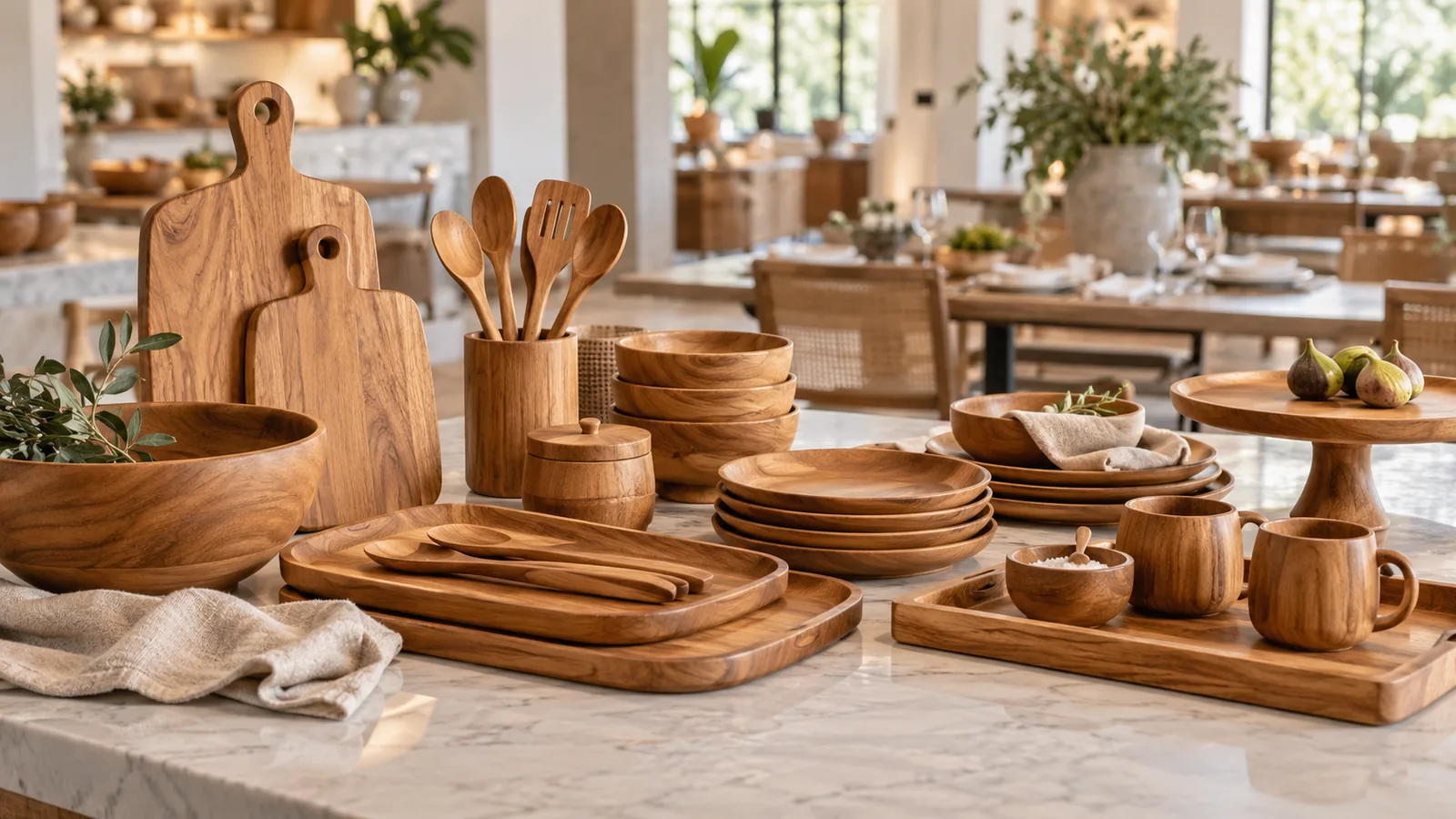
How to Choose Wooden Kitchenware for Retail and Hospitality Collections
Learn how to choose wooden kitchenware for retail and hospitality collections by considering function, size, material, design, branding, and packaging.
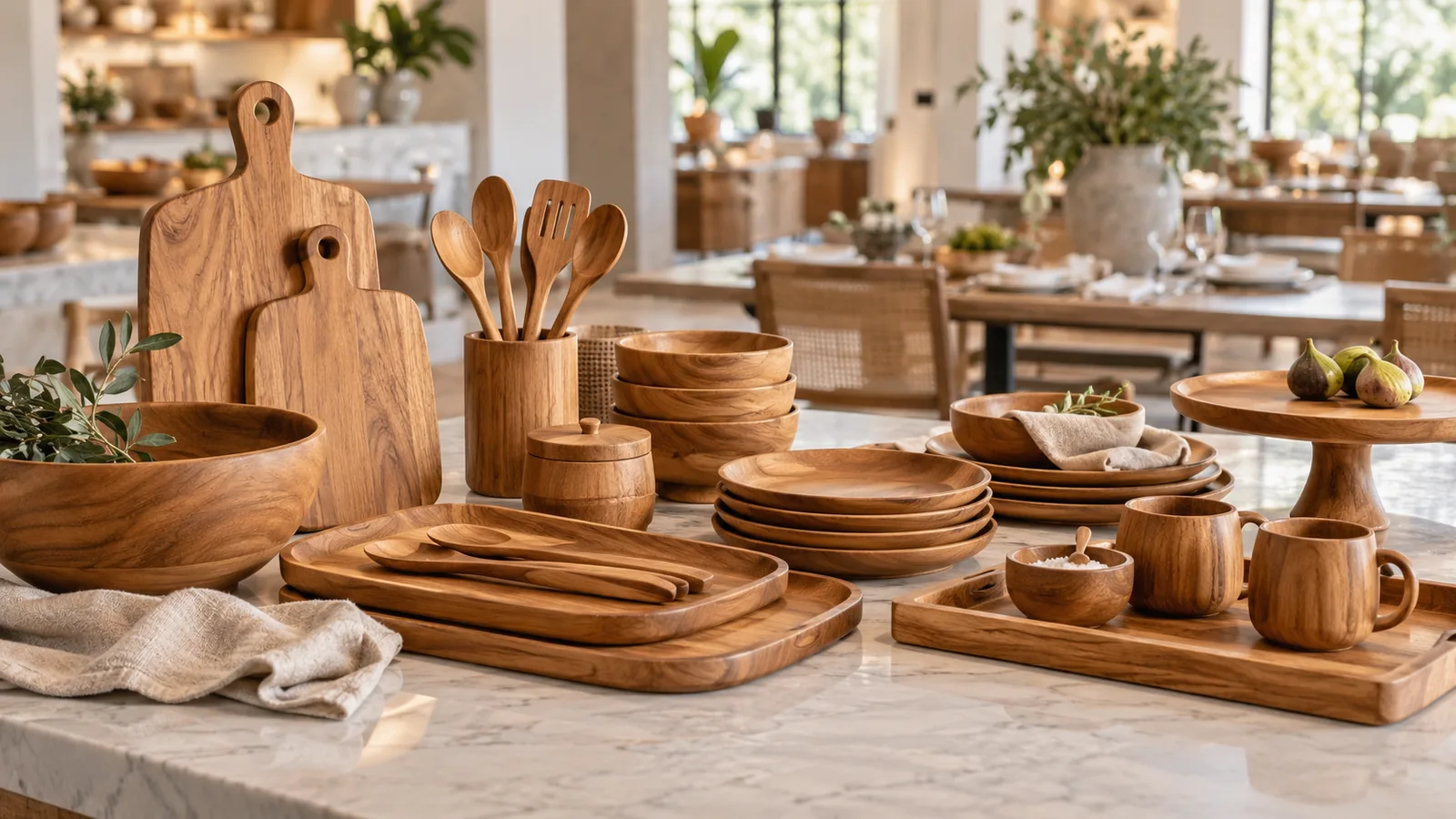
Choosing wooden kitchenware for a retail or hospitality collection is about more than selecting a beautiful design.
The right product needs to match its intended use, target customer, dimensions, material, finish, packaging, and overall brand identity.
Whether you are developing a retail collection, restaurant tableware, hotel amenities, or a private-label range, here are several things to consider before selecting wooden kitchenware.
Start with the Intended Use
The first question should always be: how will the product be used?
A cutting board designed for everyday food preparation may require different dimensions and thickness from a serving board used for restaurant presentation.
The same applies to bowls, trays, utensils, and other wooden products.
Think about whether the product will be used for:
Home cooking
Food preparation
Table serving
Restaurant presentation
Hotel room service
Gifting
Retail display
Understanding the intended use helps narrow down the most suitable design.
Choose the Right Size
Dimensions can strongly influence how practical a product feels.
Smaller cutting boards are convenient for quick preparation, while larger boards provide more working space.
Serving trays need enough surface area for their intended purpose without becoming uncomfortable to carry.
For retail collections, offering two or three coordinated sizes can also give customers more choices while maintaining a consistent design language.
Consider the Material and Natural Appearance
Wood is a natural material, which means every piece has its own grain and subtle color variations.
This natural character is one of the main reasons wooden kitchenware has such strong visual appeal.
When developing a collection, consider the type of appearance you want to achieve. A warm natural grain may work particularly well for brands focused on timeless, minimalist, tropical, or natural home living.
The material should support both the function of the product and the visual identity of the collection.
Keep Functionality in the Design
Good design should make a product easier to use.
Small details can make a noticeable difference.
A cutting board may include a handle for easier carrying or a juice groove for certain types of food preparation.
A serving tray may need comfortable handle openings.
Utensils should have proportions that feel balanced in the hand.
Before choosing a design simply because it looks attractive, think about how customers will interact with it every day.
Think About the Collection as a Whole
For retailers and hospitality brands, individual products often work better when they feel connected.
For example, a collection could combine:
Cutting boards
Wooden bowls
Serving trays
Plates
Spoons and forks
Kitchen utensils
Using similar wood tones, edge details, shapes, or finishing can make separate products feel like part of one coordinated range.
This can also make the collection easier to present in stores, catalogues, and online platforms.
Consider Branding and Packaging Early
Branding should not be an afterthought.
If a wooden product will include a logo, engraving, label, sleeve, box, or other packaging, these elements should be considered during product development.
The size and placement of branding can influence the overall look of the product.
Packaging also needs to protect wooden products during storage and transportation while presenting them appropriately for the target market.
For private-label collections, discussing these details early can make the development process much smoother.
Balance Design and Practicality
A successful wooden kitchenware collection should look attractive but also make sense for everyday use.
Very complicated shapes may look interesting but can be difficult to store, package, or use.
Simple and thoughtful designs often have greater versatility.
This is particularly valuable for professional buyers who need products that can work across different stores, markets, or hospitality environments.
Work with Clear Product Specifications
Clear specifications are essential when developing products with a manufacturer.
Before requesting a quotation or sample, it helps to prepare information such as:
Product type
Required dimensions
Target quantity
Preferred material
Surface finish
Logo or branding requirements
Packaging needs
Destination market
The clearer the product brief, the easier it is to review production feasibility and develop the right solution.
Building the Right Wooden Kitchenware Collection
A successful collection starts with understanding the customer and how the product will actually be used.
Material, dimensions, functionality, appearance, branding, and packaging all work together to create a product that feels complete.
At Indonesian Wood Kitchen Ware, we work with retailers, hospitality businesses, distributors, and private-label brands to develop wooden kitchenware based on different product and market requirements.
From existing designs to custom specifications, thoughtful product development helps transform natural wood into kitchenware that is functional, distinctive, and ready for everyday use.