
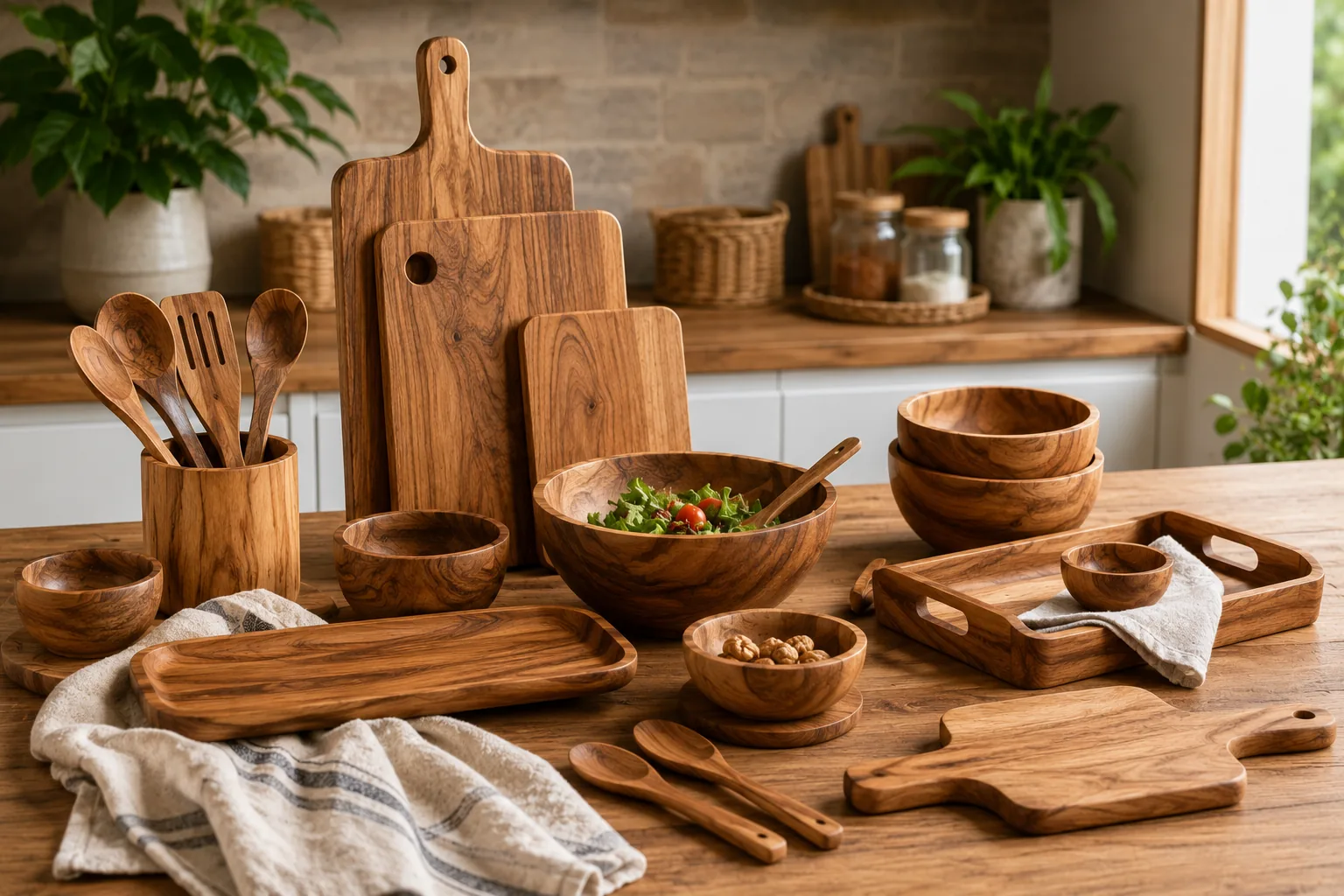
How to Choose the Right Wooden Kitchenware for Your Home
Choosing the right wooden kitchenware starts with considering its purpose, type of wood, craftsmanship, size, finish, and maintenance requirements. By selecting well-made products from quality wood such as Indonesian teak, you can enjoy kitchenware that is practical, durable, and naturally beautiful for years to come.
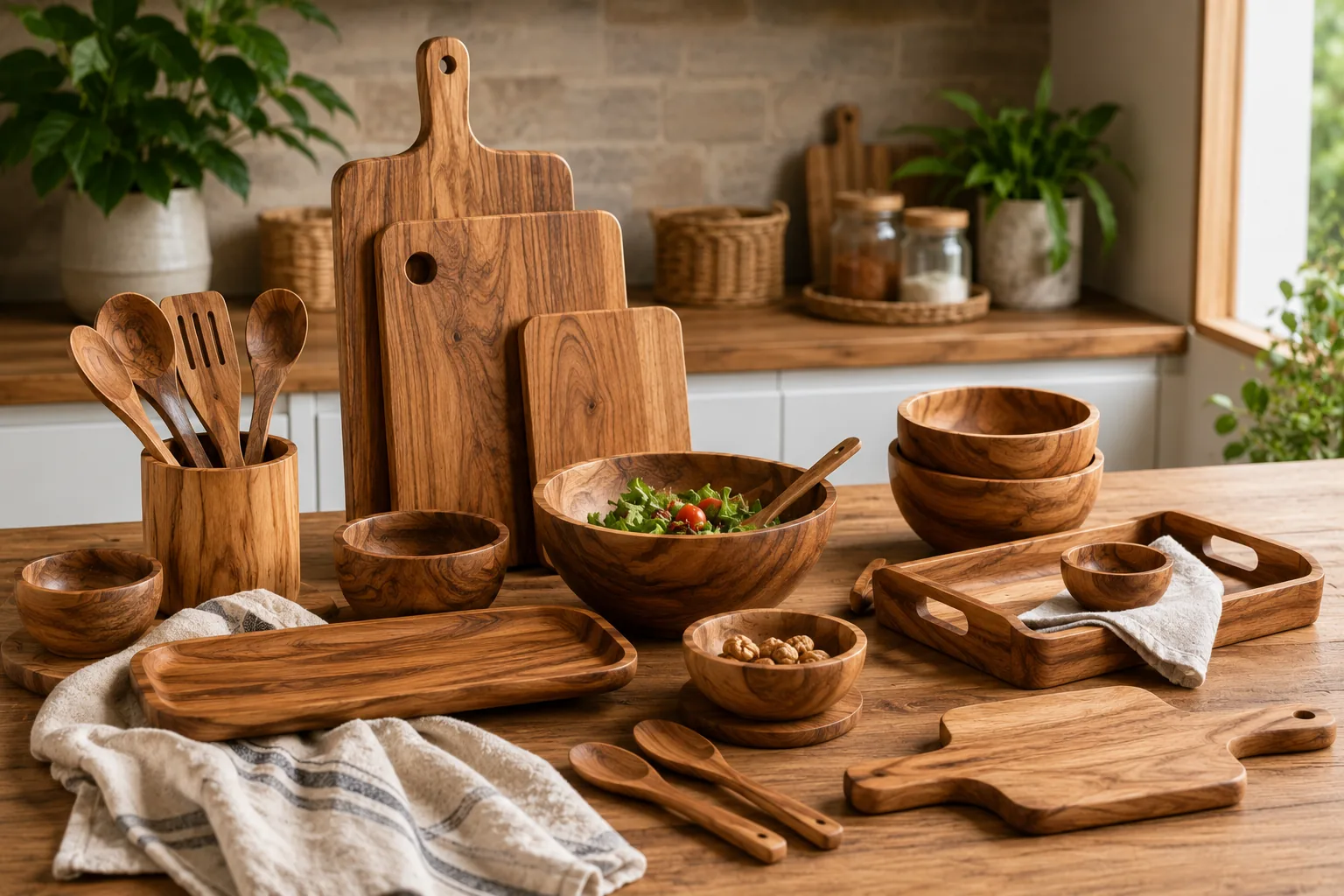
Wooden kitchenware can bring warmth, natural beauty, and a timeless feel to any kitchen. From cutting boards and serving trays to bowls, spoons, and utensils, wooden products are available in many different shapes, sizes, and types of wood.
However, with so many options available, choosing the right wooden kitchenware can sometimes be challenging. Understanding the material, purpose, construction, and care requirements can help you select products that suit your kitchen and everyday needs.
1. Consider How You Will Use It
The first step is to think about how you plan to use the product. Different kitchenware serves different purposes, so choosing based on function is important.
For example, cutting boards should be sturdy and have a suitable surface for food preparation. Wooden spoons and spatulas are useful for cooking, while serving trays and bowls can be chosen based on how you serve and present food.
If you frequently entertain guests, larger serving boards, trays, and bowls may be useful. For everyday cooking, smaller utensils and practical kitchen accessories may be more suitable.
2. Choose the Right Type of Wood
The type of wood plays an important role in the appearance, durability, and overall performance of wooden kitchenware.
Hardwoods such as teak are popular because of their strength and natural durability. Indonesian teak is especially valued for its distinctive grain, warm color, and dense structure.
Other wood species can also be suitable depending on the intended application. When choosing wooden kitchenware, consider not only how the product looks but also whether the wood is appropriate for its intended use.
3. Look at the Wood Grain and Natural Character
One of the main reasons people choose wooden kitchenware is its natural appearance. Each piece of wood can have a different grain pattern, tone, and texture.
When selecting a product, look for a grain and finish that match your personal style and kitchen interior. Natural variations should not necessarily be viewed as flaws. They are part of what makes genuine wooden products unique.
4. Check the Craftsmanship
Good materials are important, but craftsmanship also has a major impact on the quality of wooden kitchenware.
Pay attention to details such as smooth edges, consistent sanding, strong joints, and an even finish. A well-crafted product should feel comfortable in your hands and should not have rough or sharp areas that could affect its use.
For products such as bowls, trays, and serving boards, carefully finished surfaces can also contribute to both appearance and durability.
5. Consider the Size and Weight
The right size depends on your kitchen space and how you plan to use the product.
A large cutting board may be convenient for preparing multiple ingredients, while a smaller board can be easier to store and handle. Similarly, a large serving tray may be ideal for entertaining, but a smaller tray could be more practical for everyday use.
Weight is another consideration. Wooden kitchenware should feel solid and stable without being unnecessarily difficult to handle.
6. Pay Attention to the Finish
The finish can affect both the appearance and maintenance of wooden kitchenware. A good finish can enhance the natural grain while helping protect the surface.
For products that come into contact with food, make sure the finish is appropriate for food-contact use. It is also useful to check the manufacturer's care recommendations before purchasing.
7. Think About Maintenance
Wooden kitchenware is relatively simple to care for, but it does require a little attention.
Generally, wooden products should be washed gently and should not be left soaking in water for long periods. After washing, dry them thoroughly before storing.
Depending on the type of product and finish, applying suitable food-safe wood oil from time to time can help maintain the wood's natural appearance and condition.
8. Choose Quality Over Quantity
It can be tempting to purchase many wooden kitchenware products simply because they look attractive. However, choosing a smaller collection of well-made products can often be more practical.
Consider which items you actually use on a regular basis. Investing in durable kitchenware that fits your cooking and serving habits can provide better long-term value than purchasing products that remain unused.
9. Consider Responsible Sourcing
For buyers who care about sustainability, it is worth considering where the wood comes from and how the products are manufactured.
Look for suppliers who can provide information about their wood sourcing and production processes. Responsibly sourced materials and thoughtful manufacturing can help create products that are better suited to long-term use.
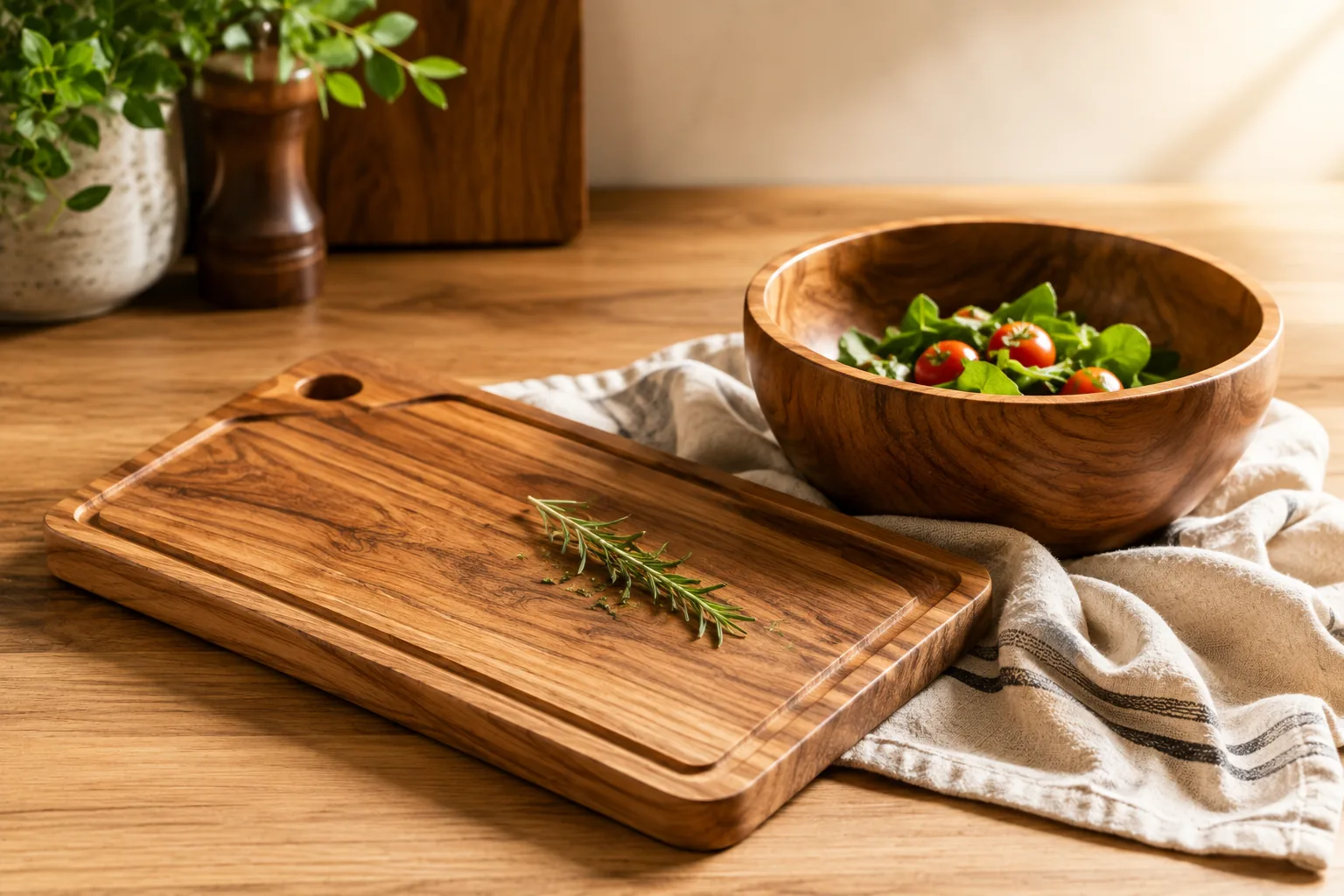
Build a Kitchen That Reflects Your Style
Choosing wooden kitchenware is not only about finding practical cooking tools. It is also about creating a kitchen environment that feels warm, natural, and personal.
Whether you prefer the rich character of Indonesian teak, simple wooden utensils, or handcrafted serving pieces, the right kitchenware can combine everyday functionality with beautiful natural design.
At Indonesia Wood Kitchenware, we produce a range of wooden kitchenware using carefully selected Indonesian wood. From cutting boards and utensils to bowls, trays, and other kitchen accessories, our products are designed to bring together natural materials, practical functionality, and thoughtful craftsmanship.
With the right selection and proper care, wooden kitchenware can become a lasting part of your kitchen for years to come.