
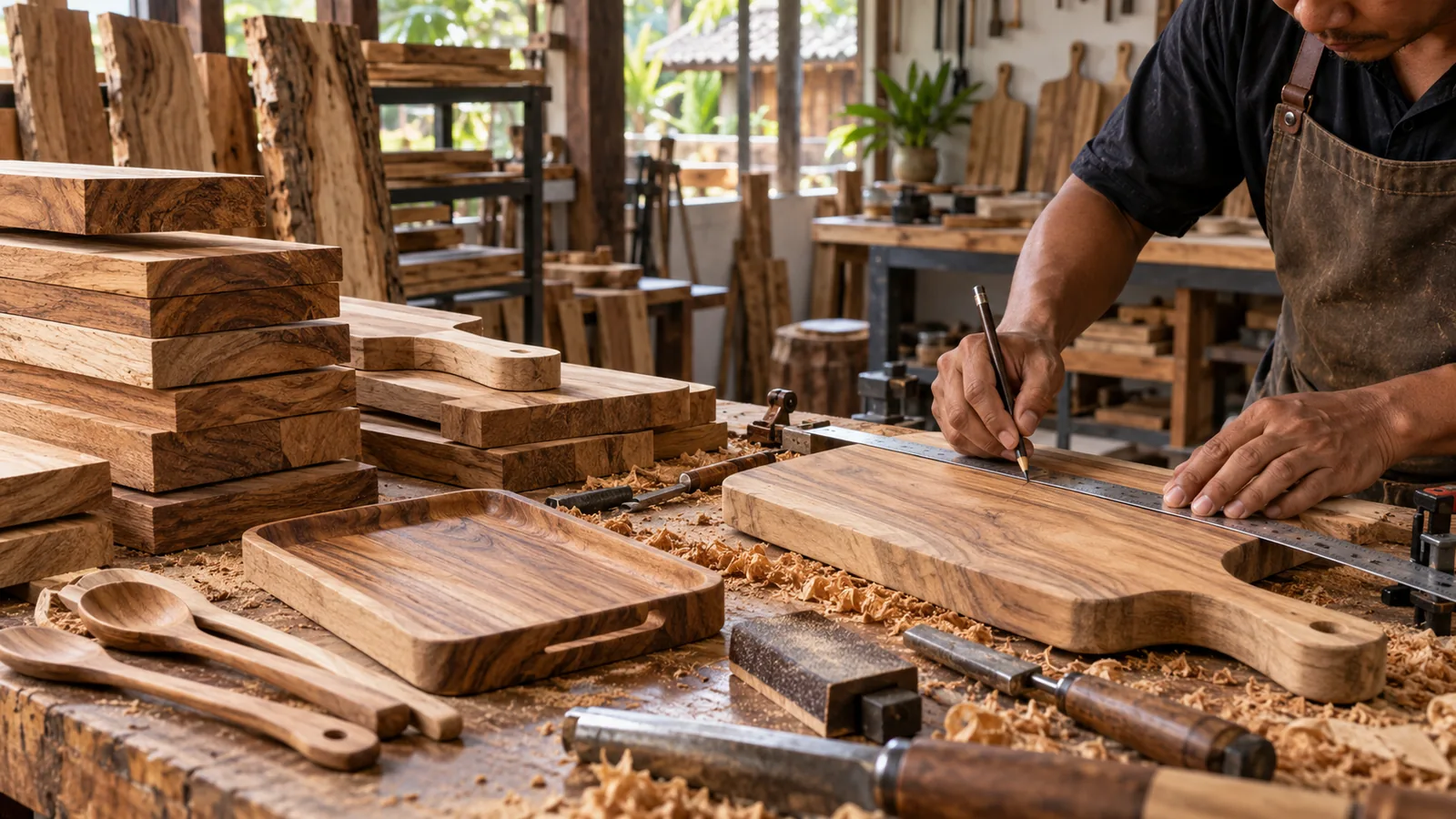
From Raw Wood to Finished Product: The Craftsman ship Behind Wooden Kitchenware
Every wooden kitchenware product begins with carefully selected timber and goes through several stages before reaching the customer. Take a closer look at how craftsmanship, precision, and attention to detail transform natural wood into functional kitchen products.
Every wooden kitchenware product starts with a natural piece of timber. Before it becomes a cutting board, spoon, tray, or serving board, the wood goes through several important processes to ensure the final product is strong, functional, and beautiful.
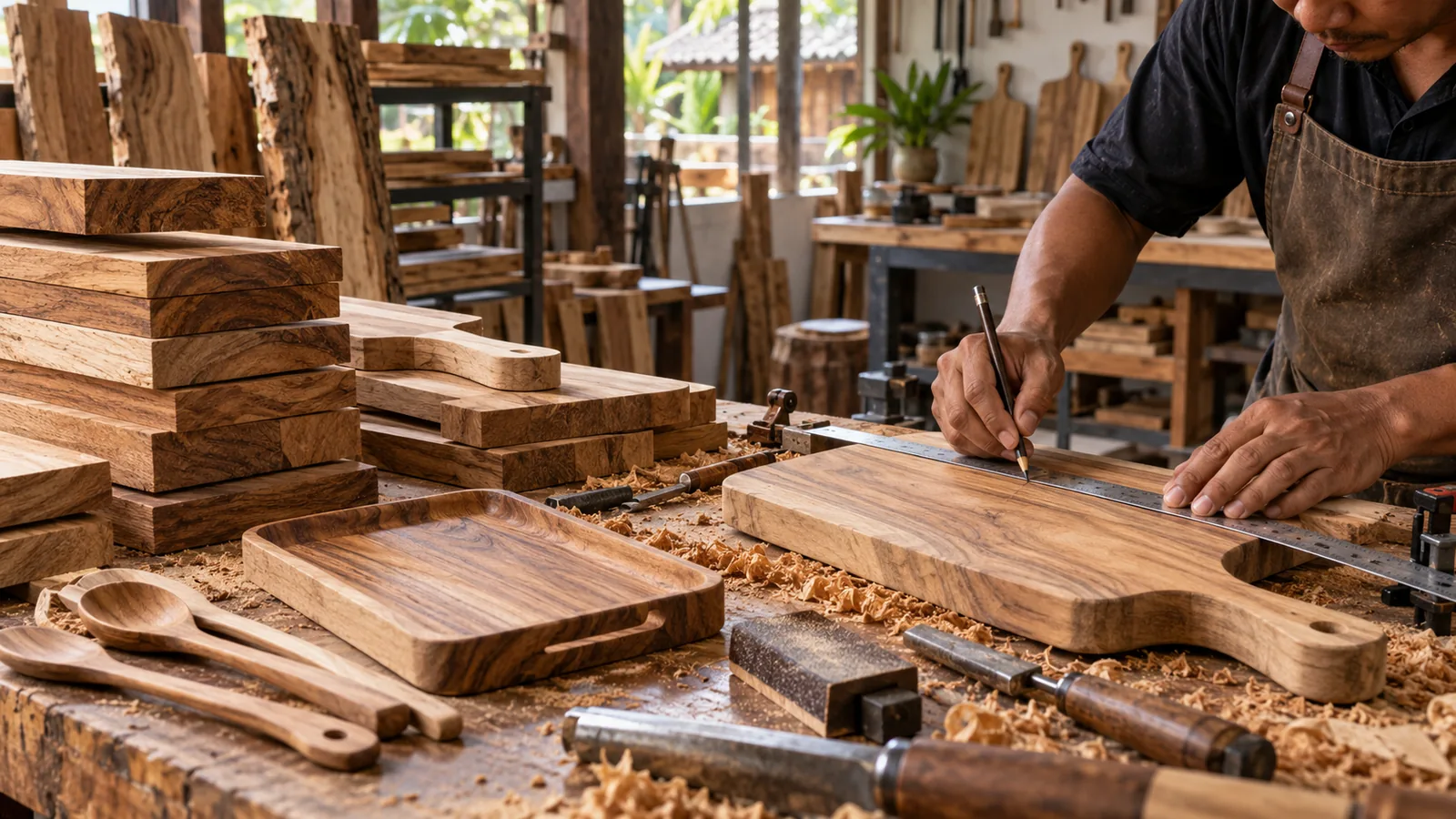
1. Selecting the Right Wood
The process begins with selecting suitable wood. The quality of the timber has a direct impact on the durability and appearance of the finished product.
For kitchenware, manufacturers commonly consider factors such as wood hardness, grain pattern, stability, and moisture resistance. Teak, acacia, rubberwood, and other suitable hardwoods can be used depending on the product and design.
2. Drying and Preparing the Timber
Fresh wood contains moisture, so it needs to be properly dried before production. This process helps reduce the risk of warping, cracking, or changing shape after the product is finished.
Once the wood reaches a suitable moisture level, it can be prepared for the next stage of production.
3. Cutting and Shaping
The dried timber is then cut into the required sizes and shapes. Depending on the product, machines and hand tools can be used to create precise dimensions.
For example, a cutting board may be cut into a rectangular or round shape, while spoons, trays, and other kitchen accessories require more detailed shaping.
4. Sanding and Smoothing
After shaping, the surface of the wood is carefully sanded to remove rough areas and create a smooth finish.
This step is important for both appearance and comfort. A well-sanded wooden product should feel smooth when handled and should have clean, refined edges.
5. Assembly and Detailing
Some wooden kitchenware products require several pieces of wood to be joined together. These pieces need to be carefully aligned to create a strong and attractive final product.
Additional details such as handles, grooves, edges, holes, or engraved designs can also be added during this stage.
6. Finishing
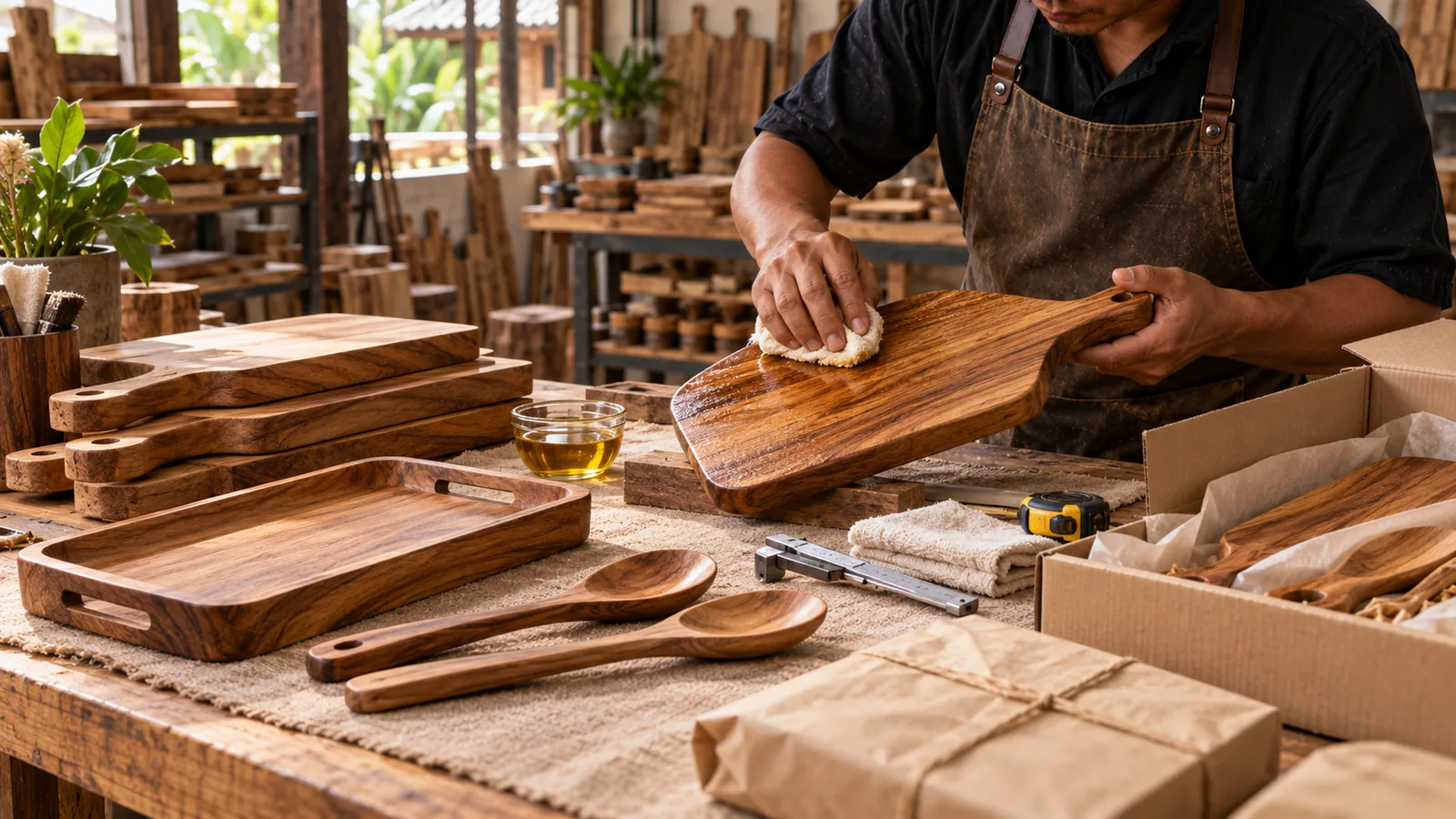
The finishing process enhances the natural appearance of the wood while providing additional protection.
For kitchenware, the finishing material should be appropriate for food-contact products. A good finish can help highlight the natural grain while making the surface easier to maintain.
7. Quality Control
Before the product is ready for packaging, each piece should go through quality control. Manufacturers check the dimensions, surface, edges, joints, finishing, and overall condition.
Products with defects or imperfections can be separated so that only products that meet the required quality standards continue to the final stage.
8. Packaging
After passing quality control, the finished kitchenware is cleaned and prepared for packaging. Packaging helps protect the products during storage and transportation.
For export orders, packaging is especially important because products may travel long distances before reaching their final destination.
Custom Wooden Kitchenware
Wooden kitchenware can also be produced according to specific customer requirements. Businesses can request different sizes, shapes, designs, finishes, and engraving options.
For restaurants, hotels, retailers, and brands, custom production and private-label wooden kitchenware can provide an opportunity to create products that match their brand identity.
The Craftsmanship Behind Every Product
Turning raw wood into finished kitchenware requires more than just cutting and shaping. Each stage, from timber selection to quality control, contributes to the final quality of the product.
The combination of natural materials, skilled craftsmanship, precision, and careful finishing allows wooden kitchenware to remain both functional and attractive.
At Indonesia Wood Kitchenware, we combine Indonesian craftsmanship with careful production processes to create wooden kitchenware for homes, businesses, and international customers. From standard products to custom designs and private-label collections, each product is made with attention to quality and detail.