
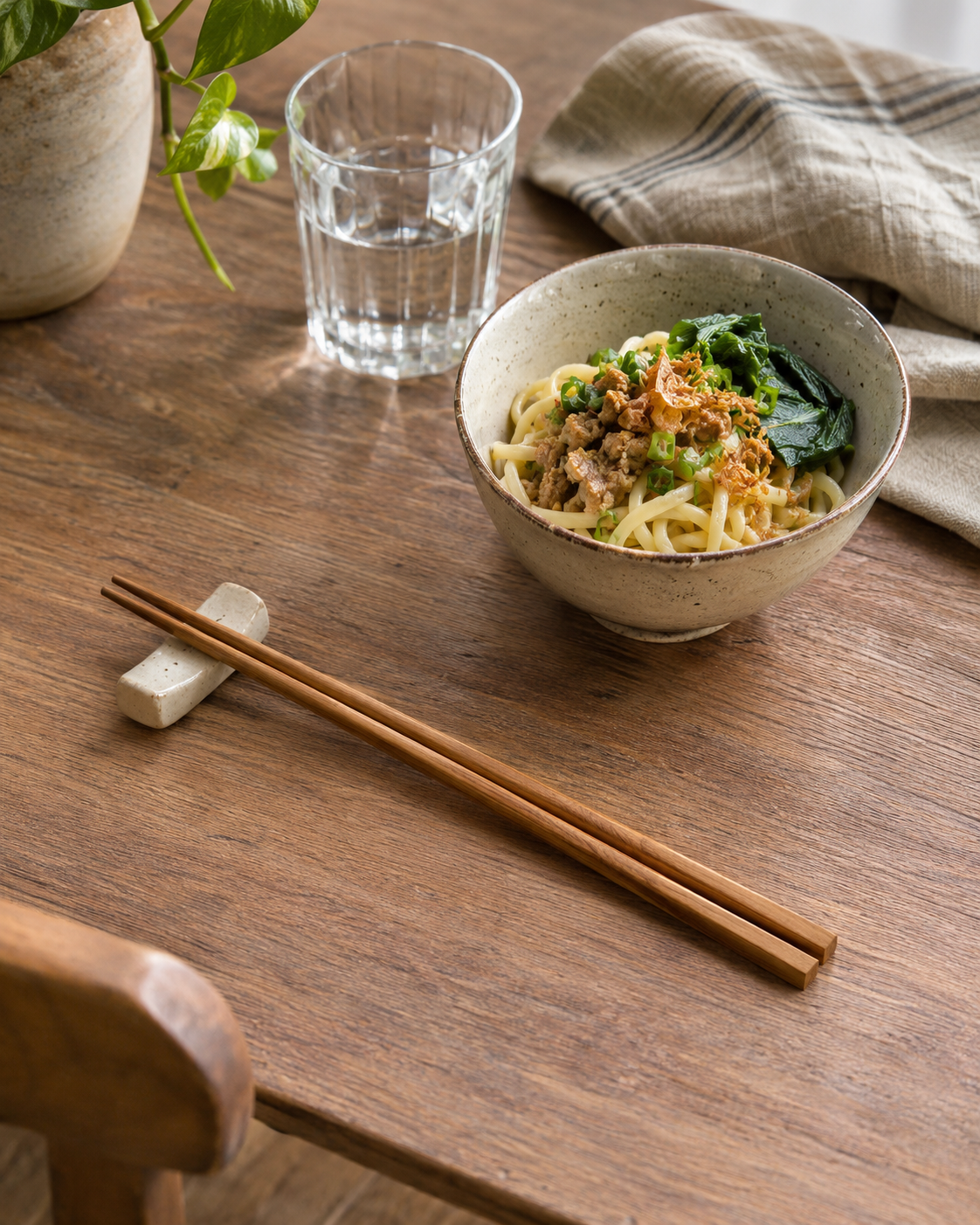
Eating Chopsticks and Cooking Chopsticks: Choosing the Right Pair
Length, grip, and tip shape influence how chopsticks feel in use. A pair for the dining table serves a different purpose from one used during food preparation. Chopsticks may share a simple form, but small differences in their proportions change how they handle. Start with the task—eating, mixing, or cooking—then comp
Choose Dining Chopsticks for Comfortable Control
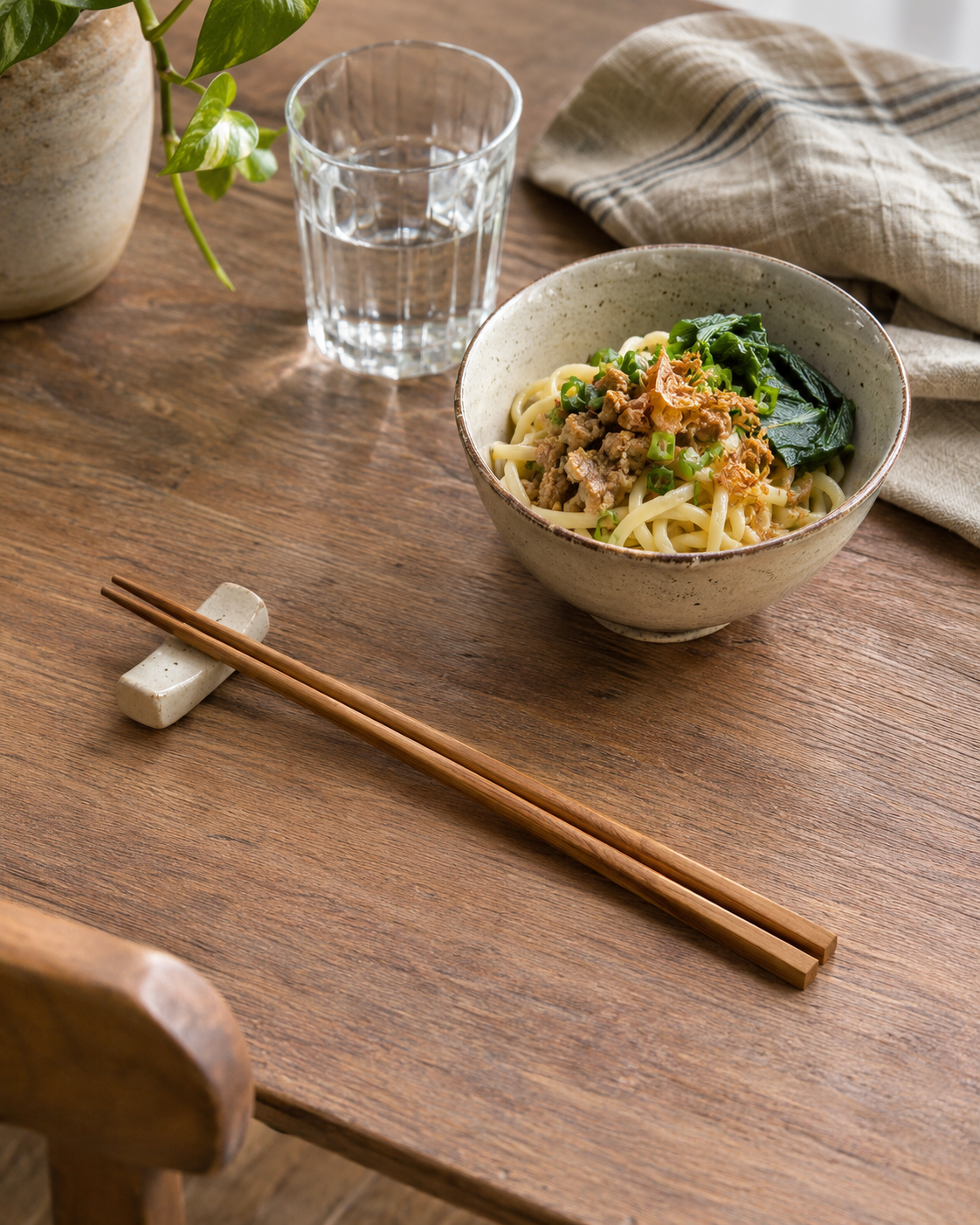
Eating chopsticks should feel manageable when picking up a bite of food. Consider the overall length, weight, and thickness where your fingers rest.
The tips matter too. Check their alignment and finish, and try a sample if you are choosing a new shape.
For a table setting, compare the chopsticks with the bowl and rest you plan to use so the arrangement feels proportionate.
Consider Longer Chopsticks for Cooking Tasks
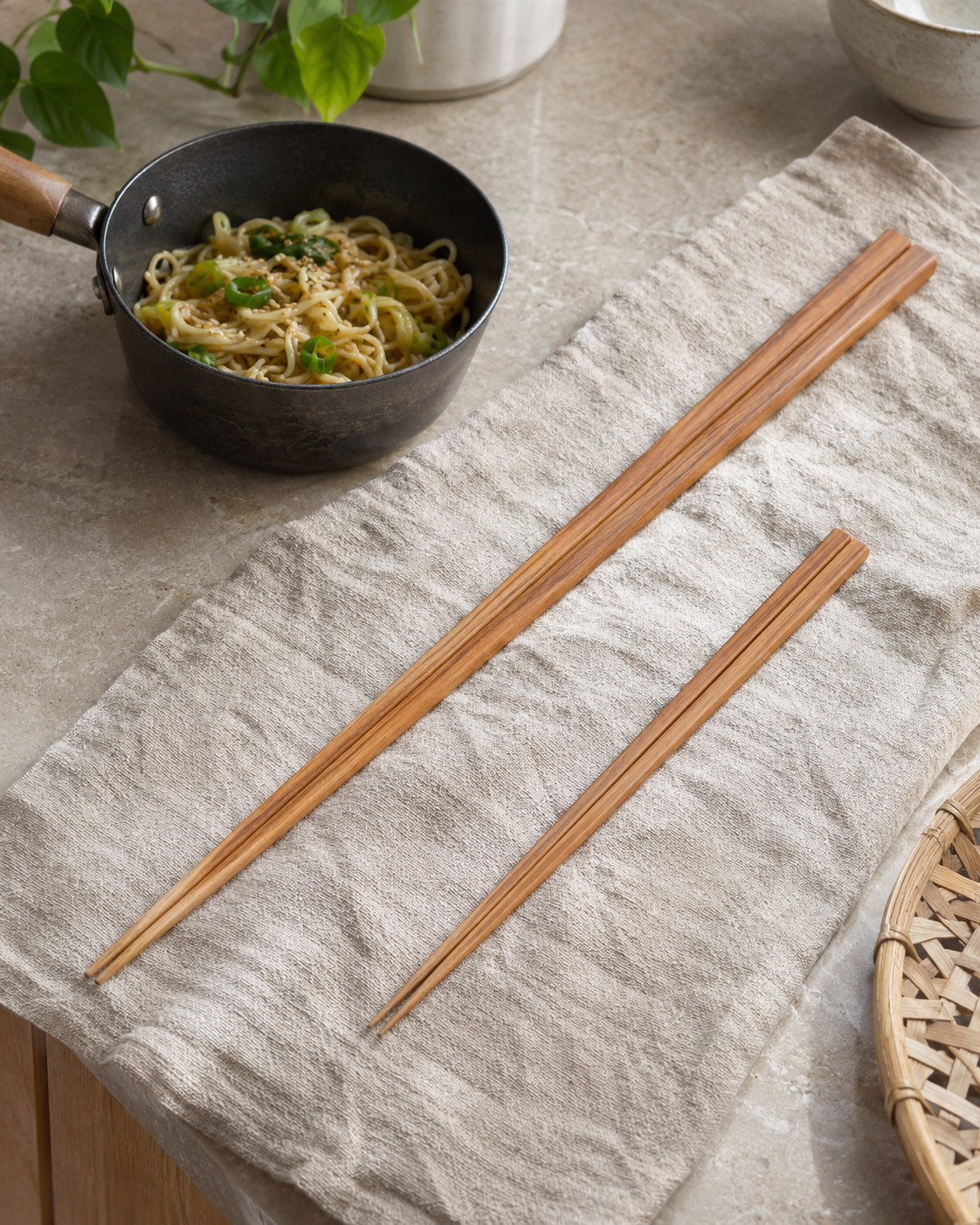
Cooking chopsticks are typically longer, giving you additional reach for tasks such as mixing noodles or moving small ingredients.
That extra length also changes the balance and requires more control. Choose a design intended for cooking and follow its guidance on temperature and suitable use.
Keep wooden utensils away from direct flames and avoid leaving them resting against hot cookware.
Look Closely at the Surface
Check that the chopsticks feel smooth, with no splinters or damaged edges. Confirm that the product and its finish are intended for the planned food-contact use.
Natural teak tones and grain patterns can vary between pairs. For a coordinated collection, compare the profile and finish alongside the colour.
Plan for Serving and Storage
A small chopstick rest gives diners a clear place to put the pair down between bites. In the kitchen, keep cooking chopsticks accessible without crowding the utensil holder.
Follow the supplied cleaning instructions and allow each pair to dry fully before storage.
Explore teak chopsticks from Indonesia Wood Kitchenware to find practical options for the kitchen and dining table.