
Comparing Wood Types for Kitchenware: Teak, Acacia, and Mahogany
This article compares the three most common wood types used for kitchenware in Indonesia, teak, acacia, and mahogany, looking at water resistance, price, and how easily each can be shaped. It wraps up with a quick guide to choosing based on what matters most, whether that's durability, price, or more detailed shapes.
When shopping for wooden kitchenware, a lot of people get drawn in by the look without really thinking about what type of wood it's made from. But each wood species has its own character that affects durability, upkeep, and how comfortable it is to use day to day. The three types most commonly used for kitchenware in Indonesia are teak, acacia, and mahogany, and understanding the differences can help you pick what actually fits your needs.
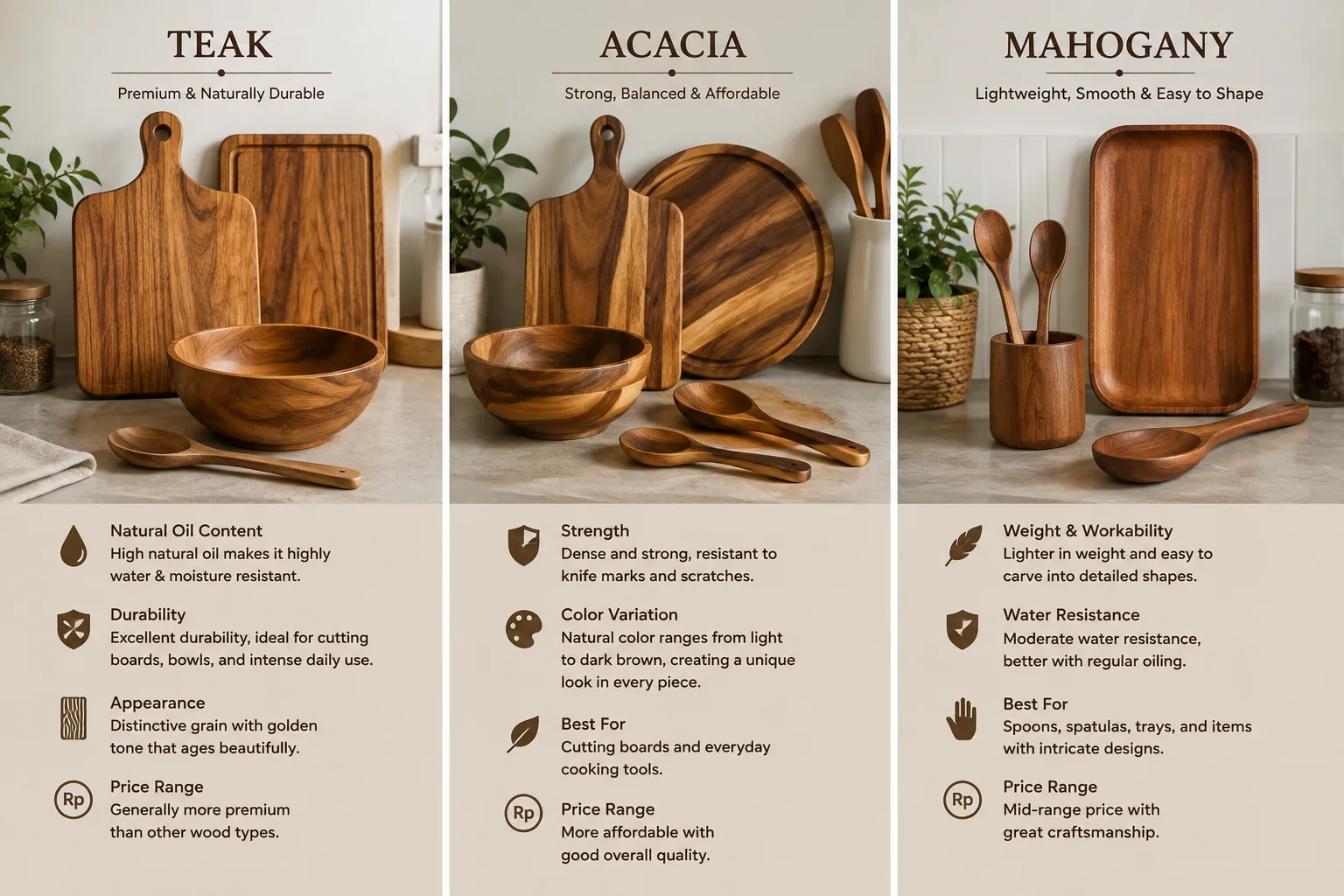
Teak is known as a premium wood thanks to its high natural oil content. That oil content makes teak more water and moisture resistant than other wood types, which makes it a great fit for cutting boards or bowls that regularly come into contact with wet ingredients. Its distinctive grain and golden tone also add to the look, though it does tend to come with a higher price tag than other options.
Acacia is a popular alternative, offering a good balance of affordability and solid strength. It has a fairly dense grain that resists knife scratches well, which is why it's often used for cutting boards and everyday cooking tools. Its color can range from light to dark brown within a single piece, giving each product a pretty unique look.
Mahogany, meanwhile, offers a nice balance of light weight and decent strength, good for things like spoons, spatulas, or trays. It's easier to shape during production, so it's often used for pieces with more intricate carving or curves. While its water resistance is a bit behind teak's, with regular oiling it still holds up well for everyday kitchen use.
There's no single right answer for which wood is best, since it really comes down to each person's needs and priorities. If maximum water resistance is the priority, teak is the way to go. If you're after a balance between price and strength, acacia is worth a look. And mahogany suits anyone wanting kitchenware with more detailed shapes and a lighter feel. Understanding what each wood brings to the table makes choosing kitchenware a more informed decision, rather than just going off looks alone.