
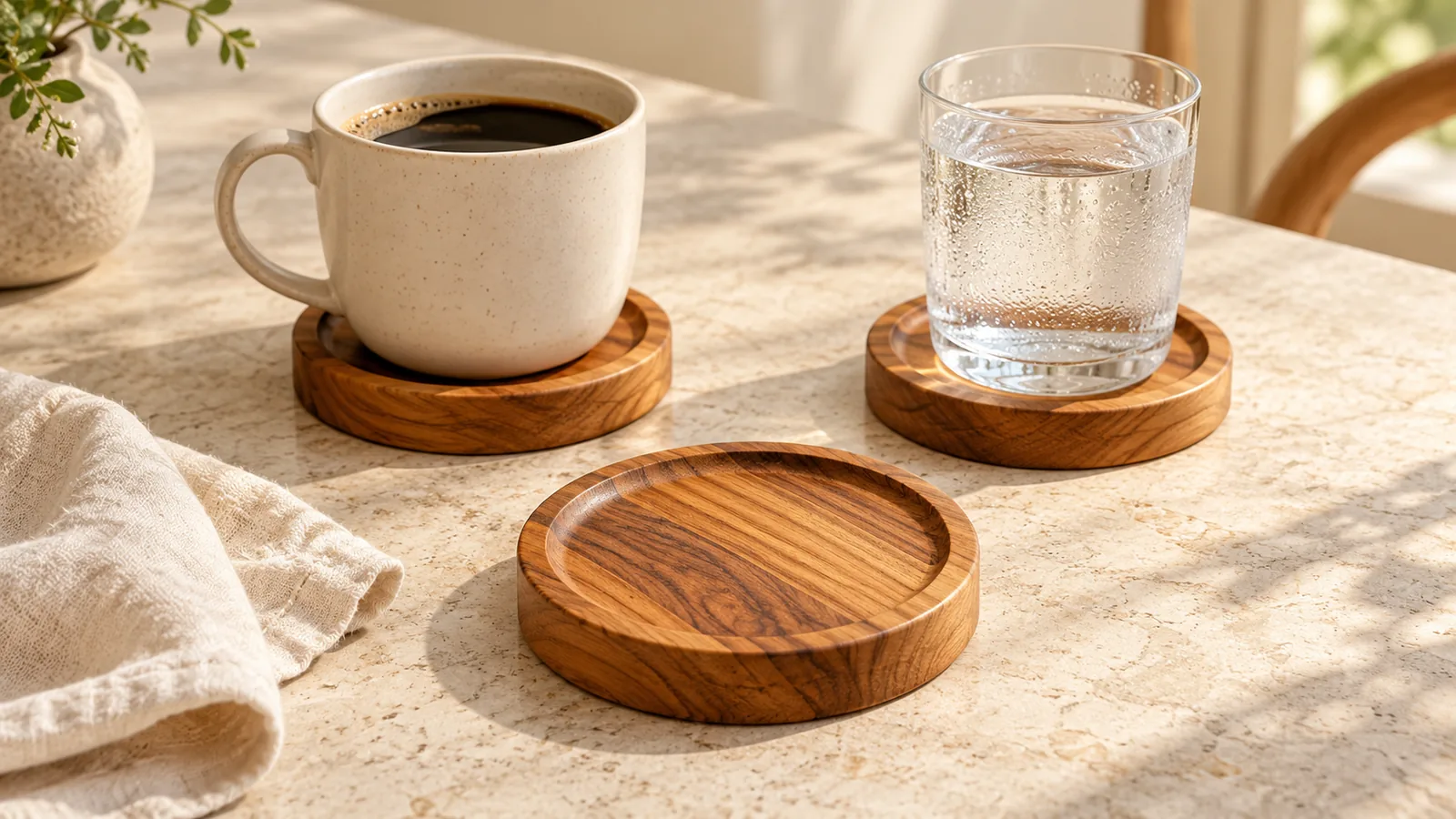
Choosing Wooden Coasters for Everyday Drinks and Table Settings
Discover how to choose wooden coasters by considering drinkware size, flat or recessed designs, stability, moisture care, and coordination with your table setting.
A coaster is a small detail that becomes useful throughout the day. From morning coffee to a glass of water beside your workspace, it gives each drink a dedicated place and helps keep the table neatly arranged.
Wooden coasters also introduce natural grain and warm colour to a setting. Choosing the right dimensions, surface, and design helps them work comfortably with the cups and glasses you already use.
Match the Size to Your Drinkware
Start with the base of your usual cups, mugs, and glasses. The coaster should provide enough room for the base to sit fully within its edges, with a little space around it.
Check larger mugs carefully, especially those with wide or irregular bases. A coaster that suits a narrow drinking glass may feel too small beneath a generous coffee mug.
If you are choosing coasters for a café or a coordinated collection, test a sample with several types of drinkware before ordering a full set.
Choose Between Flat and Recessed Designs
A flat coaster offers a simple surface that accommodates different cup shapes. Its clean profile can work well on dining tables, desks, and bedside tables.
A recessed design introduces a shallow centre surrounded by a raised edge. Check the usable diameter inside that edge, since it may be smaller than the coaster’s overall dimensions.
Whichever shape you choose, the cup should sit evenly without resting awkwardly against the rim.
Check Stability and Surface Details
A coaster should rest flat on the table without rocking. Its upper surface should also provide a steady place for drinkware.
Look for smooth edges and a carefully finished underside. Inspect the coaster on the surface where you intend to use it, particularly if your table has a delicate finish.
If the design includes feet or backing, check that these are secure and suitable for the furniture surface. Keep the underside clean so trapped dust or grit does not rub against the tabletop.
Consider Condensation and Everyday Spills
Cold drinks can leave moisture on a coaster, while coffee and tea may leave occasional drips.
Check the supplier’s guidance on the finish and intended use. Wooden coasters should not automatically be treated as waterproof, and moisture should not be left sitting on or beneath them.
Wipe away spills promptly and allow the pieces to dry before storing them. For cleaning, follow the product’s instructions rather than assuming that soaking or dishwasher cleaning is suitable.
Coordinate with Your Tableware
Wooden coasters can complement a table without matching every other wooden item exactly.
For a simple arrangement, repeat one coaster shape and finish across the table. Natural differences in grain can give each piece its own appearance while keeping the set visually connected.
Round coasters can echo the shape of cups and bowls. Square designs introduce a more defined outline, while gently rounded corners offer a softer variation.
Consider how the coasters look alongside your everyday ceramics, glassware, and serving pieces.
Plan Storage Around Daily Use
Keep coasters close to the places where drinks are usually served. A small stack near the coffee station or on a living room shelf makes them easy to reach.
If you prefer a holder, check that it fits the complete set and allows pieces to be removed comfortably. Let damp coasters dry separately before stacking them together.
For cafés and hospitality spaces, include cleaning, drying, and replacement needs when choosing quantities.
A useful wooden coaster combines suitable proportions with a stable surface and straightforward care. Thoughtfully chosen, it becomes a practical part of everyday serving while adding a quiet touch of natural character to the table.