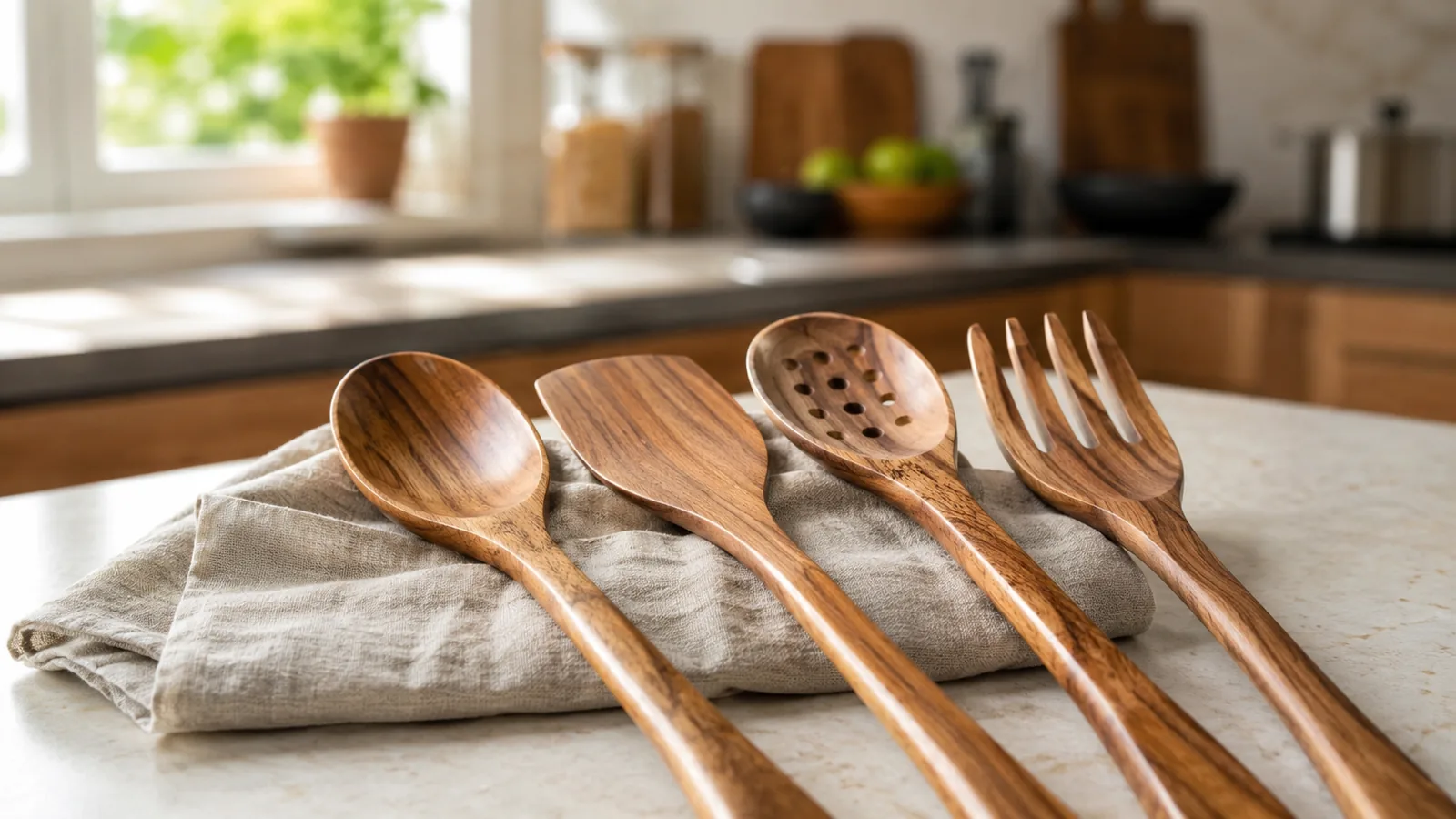
Choosing the Right Wooden Spoons and Forks for Your Kitchen
Spoons and forks, from the type of wood to how smooth the surface is finished and how comfortable the handle feels to hold. The article also outlines the ideal utensil set for everyday kitchen needs.
Wooden spoons and forks often get treated as basic tools, but picking the right ones can actually make a real difference in how comfortable cooking feels day to day. Unlike metal utensils that can scratch non stick pans or get hot to the touch, wooden ones stay cool in your hand and go easy on your other cookware.
The first thing worth checking is the type of wood. Hardwoods like teak or mahogany tend to last longer and resist absorbing smells, compared to softer woods that wear out faster. A well sanded surface matters too, since rough grain can trap food bits and bacteria if it wasn't finished properly from the start.
The shape and size of the handle also affect how comfortable it is to use. A spoon with a slightly curved handle is usually easier to hold for longer stretches, great for stirring soup or sautéing. Meanwhile, a thin edged wooden spatula works better for flipping food without scratching up your pan.
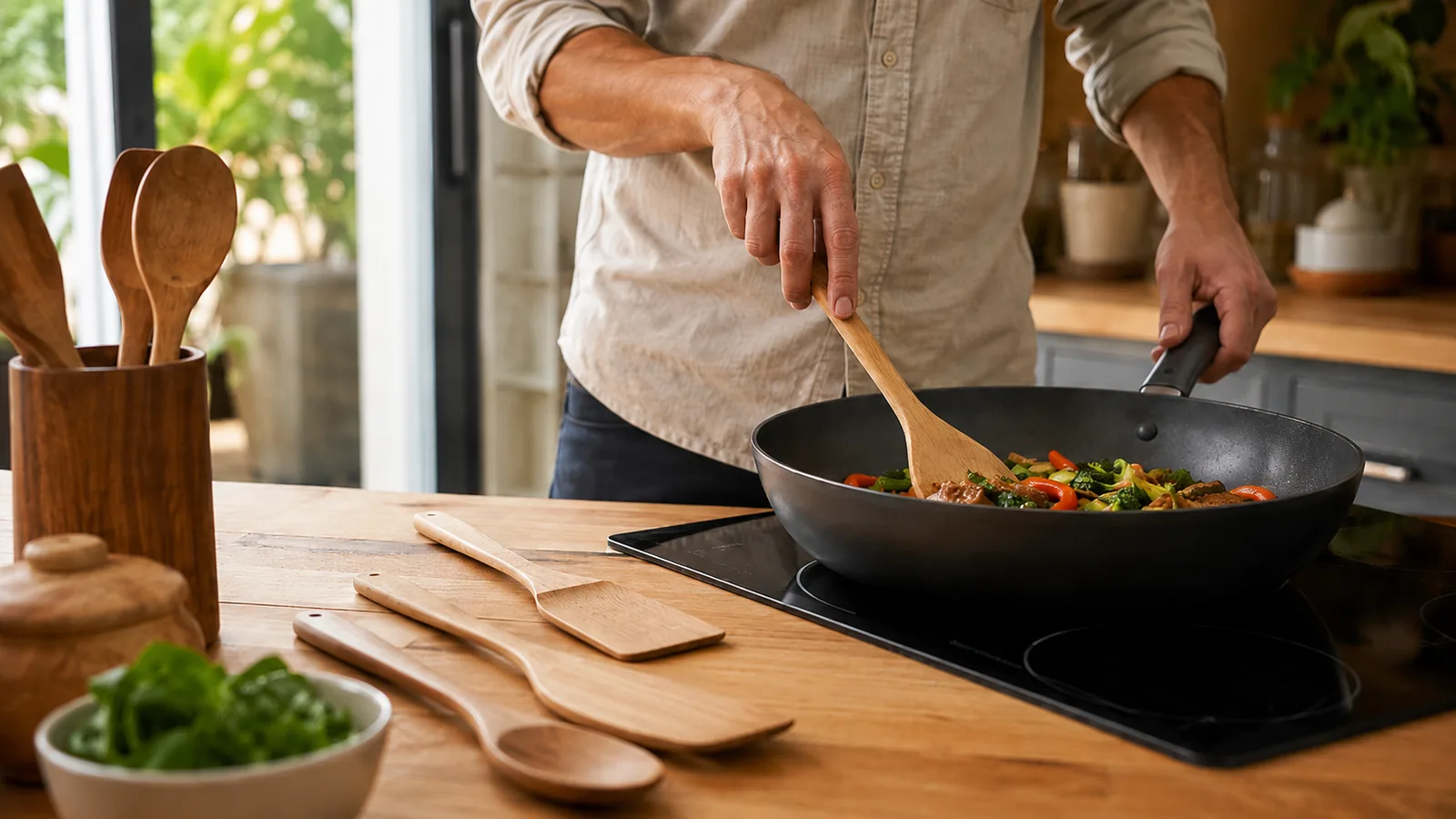
A full set usually includes a soup spoon, a flat spatula, a slotted spoon, and a large serving fork. Having this variety makes cooking more efficient while adding a natural, warm touch to the kitchen. With the right picks, wooden spoons and forks become more than just cooking tools, they turn into a decorative element that makes the whole space feel nicer.